Does Bulk Ordering Custom T-Shirts Actually Save Money Per Unit?
Yes, and by more than most people expect. Screen printing has fixed costs (screens, art prep, press setup) that are the same whether you print 36 shirts or 500, and the per-piece print price is tiered by quantity, so every break you cross lowers the cost of every shirt in the order, not just the extra ones. At French Press Custom the screen print price per piece steps down at 50, 100, 200, 450, and 1,000 pieces; the live tiers are in our screen printing cost guide. Ordering custom t-shirts in bulk is one of the smartest moves any organization can make, whether you are stocking up for a year of events, outfitting a large team, or launching a merch line.
But saving money on bulk orders is not just about ordering more shirts. The real savings come from making strategic decisions about blanks, artwork, colors, and timing before you place the order. This guide covers every angle so you can maximize your budget and get the most value from your next bulk t-shirt order.
How Many Shirts Do You Need to Qualify for Bulk Pricing?
Custom apparel pricing is built on tiers. The more you order, the less you pay per piece. This is true across every decoration method because the fixed costs (screen setup, artwork prep, machine calibration) get spread across more units.
Screen Printing Price Tiers at French Press Custom
Screen printing starts at a 36-piece minimum per design, and the per-piece print price steps down at these quantities:
- 36-49 pieces: entry tier (screen setup is built into the per-piece price, not billed as a separate line)
- 50-99 pieces: first meaningful per-unit drop
- 100-199 pieces: strong pricing, the sweet spot for most organizations
- 200-449 pieces: another step down
- 450-999 pieces: near-wholesale pricing
- 1,000+ pieces: best tier
The exact per-piece figures depend on color count and are published in the screen printing cost guide. DTG steps down at 12, 31, 51, 101, and 251 pieces and DTF at 50, 100, and 250, so the pattern holds across methods. The jump from 36 to 100 pieces yields the biggest percentage savings.
How to Hit the Next Tier
If your order is close to a price break, it almost always makes sense to add a few extra shirts to cross the threshold. Ordering 96 shirts at the 50-99 tier costs more per unit than ordering 100 at the next tier, and those 4 extra shirts can lower your total. The instant quote tool shows the per-piece price update live as you change quantity, so you can see the break before you commit.
How Many Custom Shirts Should You Order for an Event?
Start with your confirmed headcount, then add 5 to 10 percent for walk-ups, staff, and size swaps; running short is more expensive than a few extras, because a reprint is a new small order at the entry tier. Spread the order across sizes using a standard breakdown unless you have collected real sizes: roughly 10% Small, 25% Medium, 30% Large, 20% XL, 10% 2XL, and 5% 3XL and up, adjusted for your audience (youth events skew small, trade crews skew large). If the event is close to a price break (say 90 shirts), rounding up to the next tier usually costs little or nothing extra. For recurring events, order the year's shirts in one run with the date left off the design so leftovers are usable next time.
Choosing the Right Blank
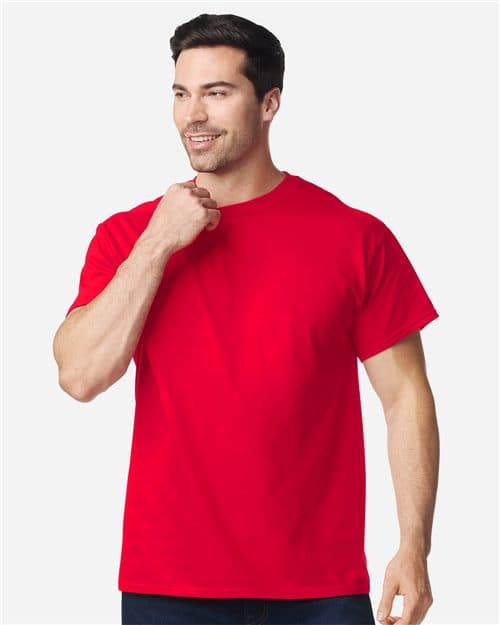
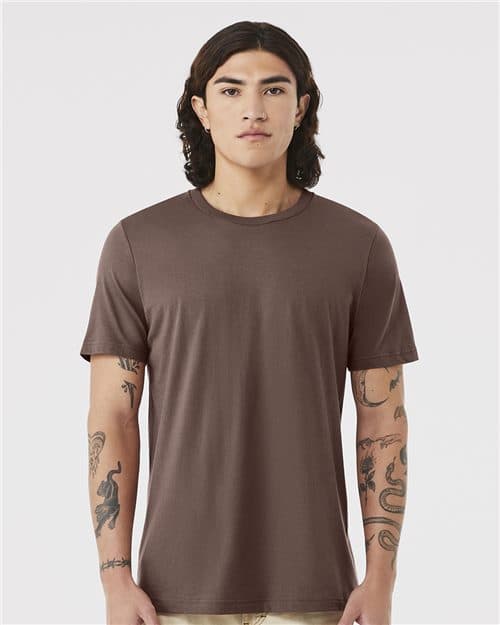
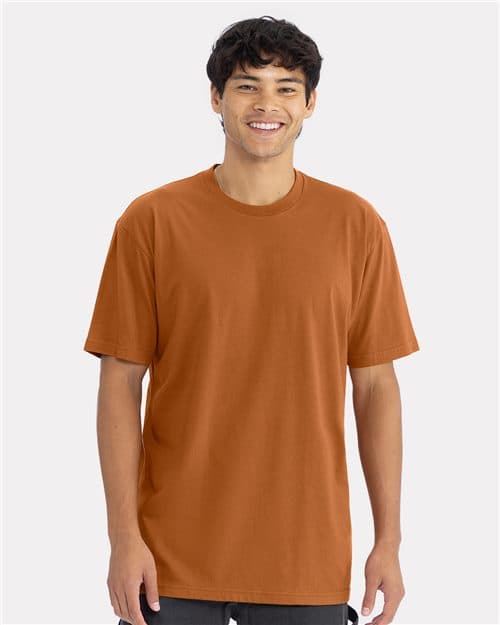
The blank t-shirt you choose is the single largest variable cost in any bulk order. The difference between a budget blank and a premium blank is a few dollars per unit, and at 500 shirts that gap becomes a line item worth thinking about. Live blank pricing is on our t-shirts page.
Budget-Friendly Blanks (Best for Large Volume)
- Gildan 5000 Heavy Cotton: The industry workhorse. Consistent sizing, solid construction, massive color range, and the lowest price point. Perfect for events, giveaways, and promotional use.
- Gildan 64000 Softstyle: A step up in softness from the 5000 at a modest price increase. Good middle ground.
- Hanes Beefy-T: Another heavyweight option with a slightly roomier fit. Reliable and affordable.
Mid-Range Blanks (Quality Upgrade)
- Next Level 3600: Soft cotton/poly blend with a modern, fitted cut. Popular for retail and band merch where comfort and style matter.
- Bella+Canvas 3001: The darling of the direct-to-consumer world. Soft, lightweight, modern fit, and excellent print surface. Slightly higher cost but strong perceived value.
Premium Blanks (Highest Retail Value)
- Comfort Colors 1717: Garment-dyed, heavyweight, relaxed fit. The vintage feel that has taken over streetwear and college campuses. Premium price, premium perception.
- AS Colour 5001: Midweight staple tee with a fashion-forward fit. Popular with brands that want a quality feel without the Comfort Colors price.
The Right Blank Depends on Your Purpose
- Corporate giveaways and event tees: Gildan 5000 or 64000. Nobody expects a premium blank on a free shirt, and the savings add up fast.
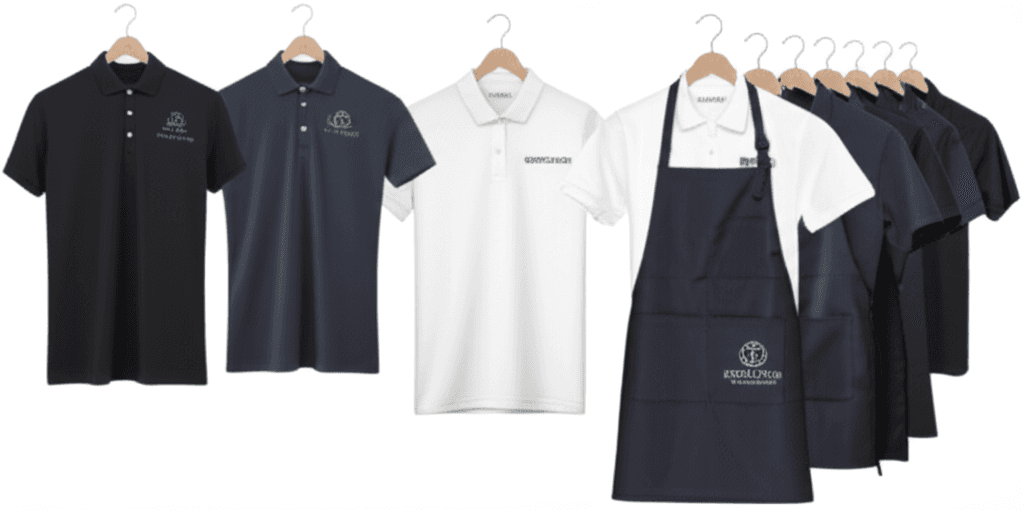
- Employee uniforms: Gildan 5000 or Hanes Beefy-T for durability. Mid-range options for customer-facing staff.
- Retail merch and brand apparel: Bella+Canvas 3001 or Comfort Colors 1717. The blank quality becomes part of the product value.
- Fundraising: Choose based on your selling price. At a lower retail price, a Gildan blank protects your margin. At a premium retail price, a Comfort Colors blank justifies the price and drives more sales.
Reducing Print Costs
The decoration itself is the other major cost component. Here is how to keep it under control.
Minimize Color Count
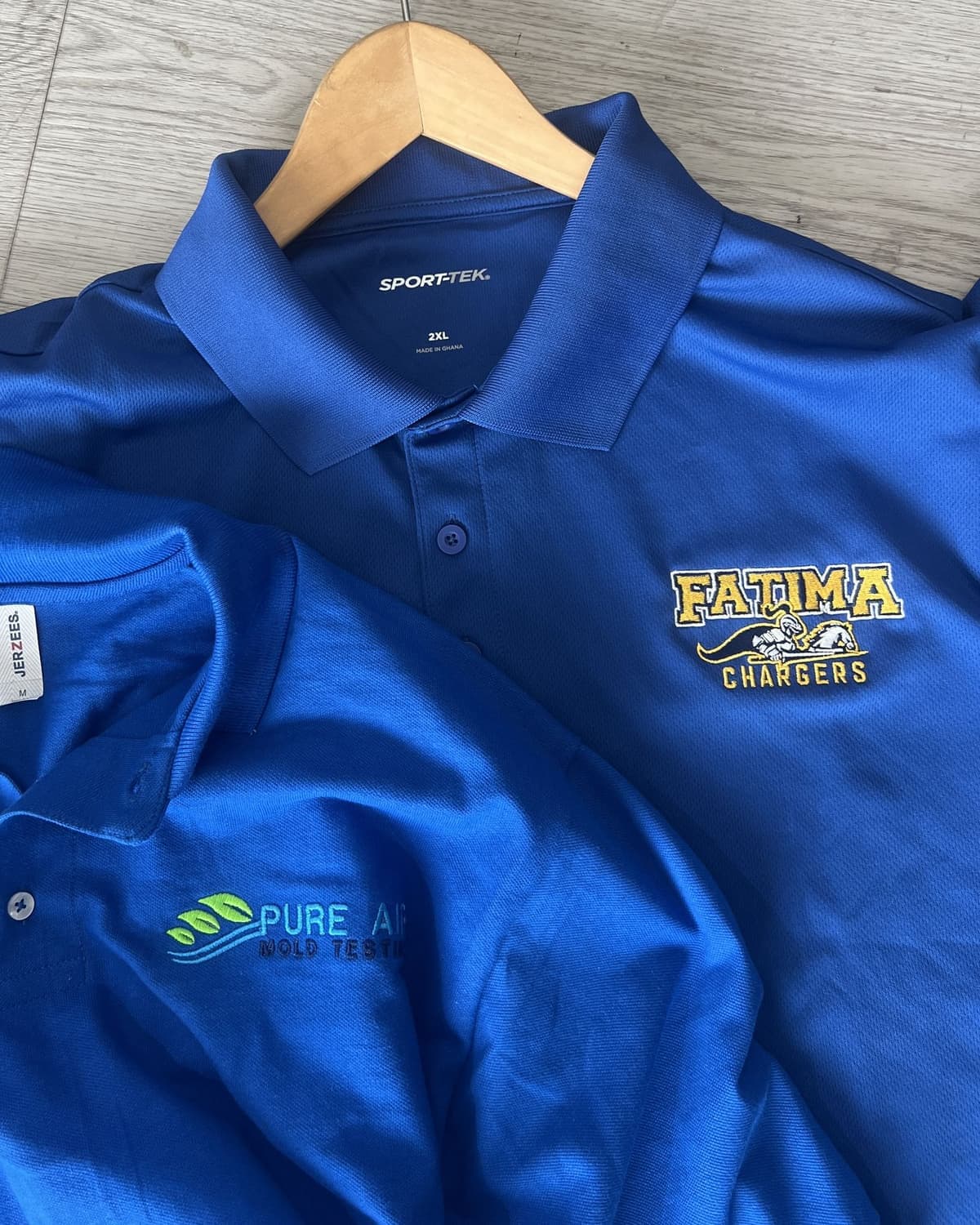
In screen printing, every ink color requires a separate screen, setup, and pass through the press. Each additional color adds a per-piece ink charge (and another screen, whose setup is built into the per-piece price); the per-color tiers are in the cost guide.
- 1 color: Most affordable. White on dark blanks or dark on light blanks.
- 2 colors: Slight increase. Still very cost-effective.
- 3 to 4 colors: Moderate increase. Most logos and designs work within this range.
- 5+ colors or full color: Consider simulated process (screen printing) or switching to DTG/DTF for complex artwork.
A smart designer can create a striking 1 to 2 color design that looks premium. Some of the most iconic t-shirt graphics in history are single-color prints.
Reduce Print Locations
Each print location (front, back, sleeve) is essentially a separate print job. A front-only design costs less than a front-and-back design.
- Front only: Lowest cost, simplest production
- Front + small back print (name/number/URL): Moderate addition
- Front + full back + sleeve: Three locations, triple the press time
If budget is tight, start with one impactful location. A great front design does not need a back print to be effective.
Use the Blank Color as a Design Element
Instead of printing a background color, choose a blank that IS the background color. A white logo printed on a black shirt uses one ink color. Printing that same logo with a black background on a white shirt requires two colors (the black background plus white knockouts). Designing with the blank in mind saves ink, screens, and money.
Artwork Preparation
Getting your artwork right before the order goes into production prevents costly delays and reprints.
Provide Vector Files
Vector artwork (AI, EPS, SVG) is the gold standard. It scales to any size without losing quality and separates cleanly into individual color layers for screen printing. If you only have a raster file (PNG, JPEG), make sure it is at least 300 DPI at the actual print size.
Finalize Before Production
Changes after screens are burned or production has started can incur additional fees and delays. Approve your proof carefully. Check colors, spelling, placement, and sizing. Confirm the blank color and style. Once you sign off, that design goes to press.
Keep a Design Archive
Save your approved vector files, color callouts (PMS numbers), and proof sheets. When you reorder, you can skip the entire art setup process and go straight to production. Most printers keep your files on record, but having your own copy is smart insurance.
Timing Your Order
When you place your order matters more than most people realize.
Avoid Needing a Rush
Standard turnaround at French Press Custom is about 2-3 weeks after the artwork is approved and the deposit is paid, and larger multi-design runs can take a little longer. Rush available depending on the schedule. Tell us your date. Planning ahead and ordering with standard lead time keeps you off the tight-date path entirely.
Order During Off-Peak Seasons
Custom apparel has seasonal demand peaks:
- Peak: March through June (schools, graduations, summer events) and September through November (fall sports, holiday gifts)
- Slower: January through February and July through August
Ordering during slower periods may give you faster turnaround, more attention from your printer, and occasionally better pricing.
Consolidate Annual Needs
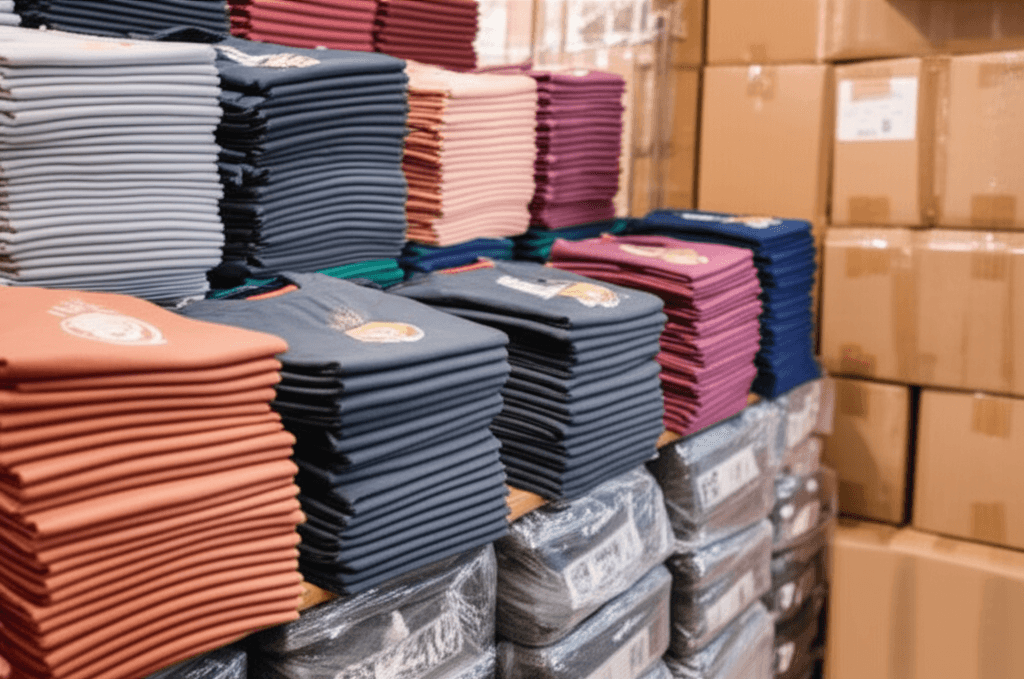
If you know you will need shirts for Q1 events, summer camp, fall fundraiser, and holiday gifts, consider ordering everything at once. One large order at the highest price tier beats four small orders at lower tiers. You can specify different designs and sizes within the same order.
How Do You Get Wholesale Pricing on Custom Merchandise?
Wholesale pricing at French Press Custom is not a separate price list you apply for; the bulk tiers apply automatically to any order, and above roughly 500 pieces our wholesale program adds contract pricing with locked rates, scheduled deliveries, a dedicated account contact, and warehousing or drop-ship for ongoing programs. If you are a brand, school, or company placing recurring orders, or a private-label brand that also needs relabeling and finishing, start on the wholesale page and tell us your expected annual volume; we can set up standing blank selections, artwork kept on file, and scheduled reorders so every run lands at the best tier. For a one-time large order, simply enter the full quantity in the quote tool and the bulk tier applies automatically.
Quality Control for Large Orders
When you are ordering hundreds or thousands of pieces, quality matters at scale.
- Request a production sample before the full run if possible, especially for new designs or blanks you have not used before
- Specify acceptable tolerance for color matching if brand colors are critical
- Inspect a sample from the delivered order immediately upon receipt and report any issues right away
- Store bulk inventory properly in a cool, dry place away from direct sunlight to prevent fading and yellowing
Plan Your Next Bulk Order
Bulk t-shirt ordering is where smart planning meets real savings. Choose the right blank for your purpose, keep your color count lean, provide clean artwork, time your order strategically, and take advantage of quantity price breaks. These decisions compound, and organizations that approach bulk ordering strategically save thousands of dollars per year.
French Press Custom produces bulk custom apparel for businesses, schools, teams, events, and brands across Southern California. With over 50 blank brands in stock, competitive bulk pricing, and a production team built for volume, we make large orders easy.
Get a free quote, see our screen printing services, or call (562) 407-3800 to discuss your bulk order today.