Custom uniforms do more for a small business than just make the team look professional. They build brand recognition, create a sense of team unity, and signal credibility to customers. Whether you run a restaurant, landscaping company, auto shop, real estate office, or retail store, a well-executed uniform program is one of the highest-ROI branding investments you can make.
But if you have never ordered custom uniforms before, the process can feel confusing. What blanks should you choose? Which decoration method works best? How do you handle sizing across your team? What should you budget?
This guide walks you through the entire process from start to finish.
Step 1: Define Your Uniform Needs
Before reaching out to a printer, spend a few minutes defining what you actually need.
What garments do you need?
- T-shirts: Casual environments, outdoor work, layering
- Polo shirts: Professional but comfortable, popular for retail and offices
- Button-down shirts: More formal environments, real estate, hospitality
- Hoodies and jackets: Outdoor work, cold storage, seasonal layering
- Hats: Restaurants, outdoor crews, brand visibility
- Aprons: Food service, retail, salons
How many of each?
Count your current employees and add a buffer. A good rule of thumb is to order 10 to 15 percent extra to cover new hires, replacements, and sizing exchanges. If you have 20 employees and want each person to have 3 shirts, that is 60 shirts plus a 10 percent buffer, so order around 66.
What will the uniform endure?
This matters more than most people realize. A screen-printed logo on a landscaping crew's shirt faces very different conditions than an embroidered logo on a real estate agent's polo. Consider:
- Daily wear frequency
- Laundering frequency and method (home wash vs. industrial)
- Exposure to chemicals, grease, dirt, or sun
- Physical activity and stretch requirements
Step 2: Choose the Right Blank Garments
The blank garment is the foundation of your uniform. A great logo on a cheap shirt still feels cheap. Here are the most popular options by category:
T-Shirts
- Bella+Canvas 3001: Soft, fitted, modern cut. Great for customer-facing roles where style matters.
- Gildan 5000: Reliable, affordable, classic fit. Good for crews and physical work.
- Next Level 3600: Premium feel similar to Bella+Canvas with a slightly different fit.
- Comfort Colors 1717: Heavyweight garment-dyed tee with a broken-in feel. Popular for casual brands.
Polos
- Port Authority K500: The industry standard work polo. Durable, affordable, wide color range.
- Nike NKBV6042: Premium branded blank. Moisture-wicking, professional, great for client-facing teams.
- Under Armour 1370399: Performance polo with stretch. Popular for active teams.
Outerwear
- Port Authority J317: Soft shell jacket, professional appearance, windproof. Good for outdoor professionals.
- Independent Trading Co. SS4500: Midweight hoodie, popular for casual and creative environments.
Hats
- Richardson 112: The most popular trucker cap in the industry. Dozens of color combinations.
- Flexfit 6277: Structured fitted cap for a clean, professional look.
- Port Authority C112: Snapback trucker, budget-friendly with solid quality.
Tips for choosing blanks
- Order samples before committing. Most blank distributors offer single units at low cost. Feel the fabric, check the fit, wash it once.
- Consider your logo colors. Your blank color needs to provide enough contrast for your logo to be visible and on-brand.
- Think about long-term availability. Choose mainstream styles from established brands so you can reorder the exact same garment for years.
Step 3: Select the Decoration Method
The right decoration method depends on your design, garment choice, and budget. Here is what works best for uniforms:
Embroidery
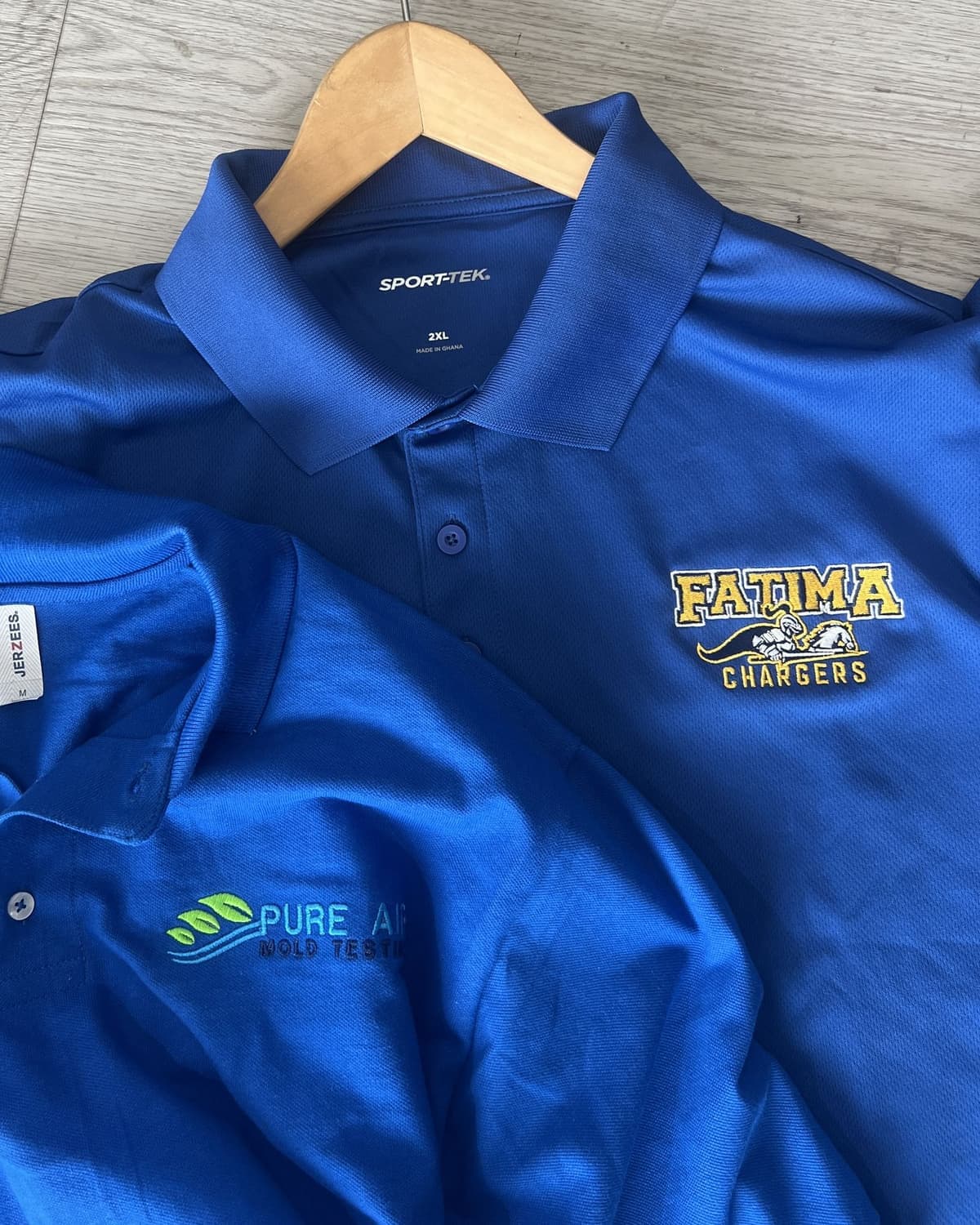
Best for: Polos, jackets, hats, and any situation where a premium, professional look matters. Embroidery is the gold standard for corporate uniforms.
Pros: Extremely durable, professional appearance, textured dimension, withstands industrial laundering.
Cons: Not ideal for large designs or fine detail. Per-unit cost is higher than screen printing for large areas. Limited to smaller logo placements (typically left chest, right sleeve, or back of collar).
Typical cost: priced per piece by quantity and stitch count, plus a one-time digitizing fee per design. Current tiers are in our embroidery cost guide. Minimum 24 pieces per design.
Screen Printing
Best for: T-shirts with larger logos, back prints, or multi-location designs where you want a flat, smooth finish.
Pros: Cost-effective at volume, vibrant colors, huge design area, variety of ink types for different feels.
Cons: Setup for each color and location is built into the per-piece price. Less practical for very small orders or designs with many colors.
Typical cost: priced per piece by quantity and color count; current tiers are in our screen printing cost guide. Minimum 36 pieces per design.
Vinyl Heat Transfer
Best for: Individual name personalization, small orders, and when you need different text on each garment (employee names, for example).
Pros: Sharp text and numbers, no setup fees, works on diverse fabrics, specialty finishes available.
Cons: Not ideal for large, complex designs. Noticeable hand feel on the garment.
Typical cost: priced per color per location; minimum 6 pieces. Price it in the quote tool.
Combination approach
Many businesses use a combination. For example, embroidered logo on the left chest and a vinyl employee name on the right chest. Or a screen-printed back design with an embroidered front logo. Mixing methods gives you the best of each technique.
Step 4: Handle Sizing Correctly
Sizing is where uniform orders most commonly go wrong. Here is how to get it right:
Collect sizes properly
- Distribute a size chart with actual measurements, not just S/M/L. Every brand fits differently.
- Set a deadline for size submissions and enforce it. Stragglers delay the entire order.
- Order samples in a few sizes and let employees try them on before you commit.
- Track sizes in a spreadsheet with employee names. You will need this for reorders.
Account for size distribution
A common small business size distribution looks roughly like this:
- Small: 10%
- Medium: 25%
- Large: 30%
- XL: 20%
- 2XL: 10%
- 3XL+: 5%
Your team may vary, but this gives you a starting point if you need to estimate.
Extended sizes
Most blank garments are available up to 3XL or 4XL, but extended sizes carry a per-size upcharge on the blank. Budget for this so you are not caught off guard; the quote tool applies it automatically when you enter your size breakdown.
Step 5: Budget Realistically
Here is how to build a realistic budget for a small business uniform order:
Per-employee cost (2 to 3 uniform pieces)
- Budget option: 2 basic cotton tees with a 1-color screen print
- Mid-range option: 2 premium tees (screen printed) + 1 polo (embroidered)
- Premium option: 2 polos (embroidered) + 1 jacket (embroidered)
Price each tier by entering your garment, quantity, and decoration in our instant quote tool; it uses the same live pricing as our quotes. For typical all-in ranges by method, see the screen printing cost guide, the embroidery cost guide, and our LA custom apparel price index.
Do not forget these costs
- Setup fees: screen setup is built into the per-piece price for screen printing, and there is a one-time digitizing fee per embroidered design (current figures in the cost guides above)
- Extra sizes: 2XL and above typically cost more per blank
- Shipping: Factor in delivery costs, especially if you need items shipped to multiple locations
- Buffer stock: Extra pieces for new hires and replacements
Tax deduction
Custom uniforms with a company logo that are required for work are generally tax-deductible as a business expense. Consult your accountant, but this can offset a meaningful portion of the cost.
Step 6: Plan for Reorders
Your first order is not your last. Employees leave, new people join, shirts wear out, and sizes change. Build reorderability into your plan from the start:
- Keep your artwork files organized. Your printer should have them on file, but keep your own copies.
- Document your exact blank selections. Brand, style number, color code. Do not rely on "that gray polo we ordered last time."
- Choose a printer who keeps your artwork and embroidery files on file. We keep your artwork on file, so reorders are quick.
- Set a reorder schedule. Many businesses reorder quarterly or biannually. Some printers offer volume discounts for annual uniform contracts.
Step 7: Work With the Right Printing Partner
Not all print shops are set up for uniform programs. Look for a partner who offers:
- Multiple decoration methods so they can recommend the best approach rather than defaulting to whatever equipment they have
- Blank sourcing from major distributors like S&S Activewear, SanMar, or alphabroder
- Sample programs so you can see and feel garments before ordering
- File storage for artwork, embroidery files, and screen setups
- Consistent quality across reorders, not just the first batch
- Responsive communication because uniform orders involve coordination and you need a partner who is easy to reach
Get Your Uniform Program Started
A well-planned uniform order is straightforward when you have the right partner guiding you through the process. Take the time to choose quality blanks, match the right decoration method to your needs, collect sizes properly, and plan for the long term.
French Press Custom has been outfitting small businesses across Southern California since 2010. From single-location shops to multi-site operations, we help businesses of all sizes build uniform programs that look professional and last.
Ready to get your team looking sharp? Request a free quote or call (562) 407-3800. See our corporate apparel and company uniforms page for more. We will walk you through blank options, decoration methods, and pricing so you can make the best decision for your business.