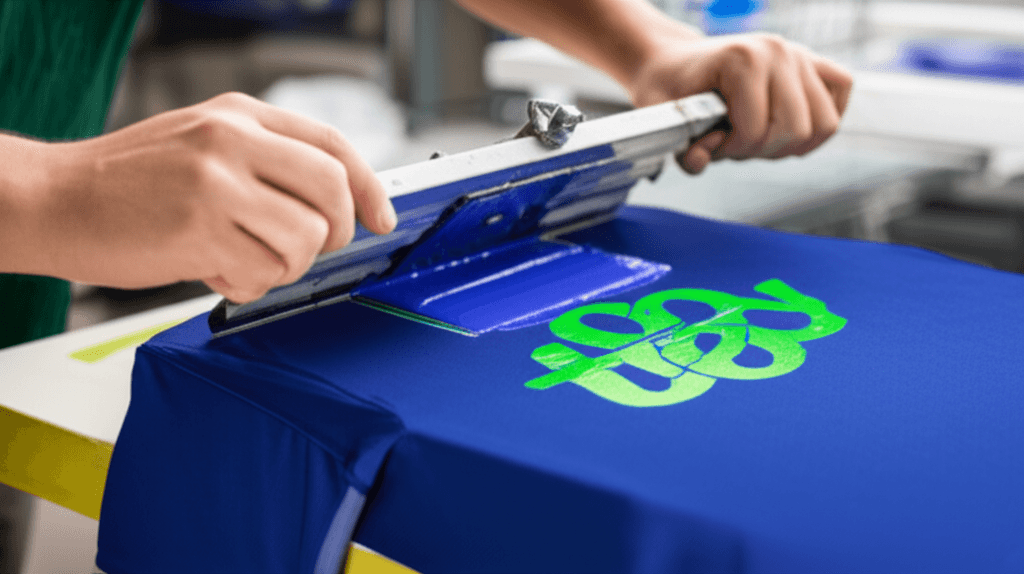
Can You Screen Print on Polyester?
Yes. You can screen print on polyester, including 100% polyester performance tees, sports jerseys, and moisture-wicking athletic wear, but it is not the same as printing on cotton. Polyester is dyed with disperse dyes that reactivate under heat, so a standard plastisol print cured at cotton temperatures can turn a white logo pink on a red jersey. The fix is a combination of low-bleed ink, lower cure temperatures, and a few process controls. Get those right and polyester prints come out sharp and durable.
At French Press Custom, we screen print on polyester daily for teams, corporate clients, and athletic brands. Here are the challenges you need to know about and how we solve them. For pricing, polyester runs are priced like any other screen printing job; see the screen printing cost guide or price your order.
What Is Dye Migration and Why Does It Happen?
Dye migration (also called dye sublimation or bleeding) occurs when the dye used to color the polyester fabric reactivates under heat and migrates into the printed ink. The result: colored halos, blotchy prints, and the garment's dye bleeding through your design.
Polyester is dyed using disperse dyes that bond to the fabric at high temperatures. When you apply heat during the screen printing curing process (320+ degrees F), those same dyes can become gaseous again and migrate into the wet or curing ink, especially into white and light-colored inks.
The Classic Nightmare Scenario
You print a white logo on a red polyester polo. It looks perfect off the press. You cure it at 320 degrees F. Two hours later, the white ink has turned pink. The red polyester dye migrated into the white plastisol.
This is the number one reason inexperienced shops ruin polyester orders.
How Do You Stop Dye Migration on Polyester Shirts?
Five controls, used together, stop almost all migration:
1. Low-Bleed Plastisol Ink
Specialty plastisol formulations are designed to cure at lower temperatures (270-290 degrees F instead of 320 degrees F). Lower cure temp means less dye activation and less migration.
How we use it: French Press Custom stocks low-bleed white and light-colored inks specifically for polyester jobs. These inks contain blockers that resist dye penetration.
2. Low-Cure Temperature
Curing polyester prints at the lowest effective temperature minimizes dye migration risk:
- Standard plastisol: 320 degrees F
- Low-bleed on polyester: 270-290 degrees F
- Must still fully cure, so verify with temperature strips
3. Cooling the Print Immediately
After curing, rapidly cooling the garment prevents continued dye migration:
- Cold fans at the end of the conveyor dryer
- Cool air blowers on the exit
- Do not stack warm garments, since heat continues the migration process
4. Gray or Dark Underbases
On dark polyester, using a gray underbase instead of bright white reduces the contrast that makes migration visible. The gray base absorbs some migrating dye without obvious color shift.
5. DTF or Sublimation as the Alternative
For particularly problematic polyester fabrics (bright reds, royal blues, kelly greens), consider:
- DTF transfers, applied at lower temperatures with better dye migration resistance
- Sublimation printing, on white polyester this is the gold standard (no migration because the dye becomes part of the fabric); see our sublimation guide
What Is the Best Low-Bleed Ink for Screen Printing on Polyester?
For polyester performance wear and sports apparel, the best choice is a polyester-specific low-bleed plastisol, sometimes sold as low-cure or poly ink. These inks do three things a standard plastisol does not: they cure at a lower temperature (usually 270-290 degrees F), they contain dye-blocking agents that keep the garment's disperse dye from wicking into the ink film, and they are formulated to flex with stretchy knits without cracking. A low-bleed white is the critical one, because white shows migration first; print it as the underbase and top it with your colors. Pair the ink with the lowest effective cure temperature, a gray underbase on the most aggressive colors, and forced-air cooling at the dryer exit. On very bright reds, royals, and greens, a test print and a 24-hour hold before you approve the run is worth more than any ink choice.
What Other Problems Come Up When Printing on Polyester?
Adhesion Issues
Polyester does not absorb ink the way cotton does. Plastisol sits on top of the smooth synthetic fibers and can struggle to bond properly.
Solutions:
- Use polyester-specific additives in your plastisol ink
- Ensure proper cure temperature (under-cured ink has poor adhesion)
- Apply appropriate ink deposit (too thin = poor coverage, too thick = peeling risk)
- Consider using a bonding agent or primer coat
Static and Lint
Polyester generates static electricity, attracting dust and lint to the fabric surface. This can cause print defects such as tiny specks, pinholes, or contamination in the ink.
Solutions:
- Anti-static spray before printing
- Lint-free environment in the print area
- Tack cloth wipe before loading garments
- Anti-static bars on the press
Scorching
Polyester has a lower heat tolerance than cotton. Excessive temperature causes:
- Fabric sheen (glossy appearance in heated areas)
- Texture change (the fabric feels different)
- Melting in extreme cases
Solutions:
- Flash cure at lower temperatures and shorter durations
- Use flash units with focused heat, not broad radiant panels
- Monitor fabric temperature, not just ink temperature
Moisture-Wicking Coatings
Many performance polyester garments have moisture-wicking treatments or coatings on the fabric surface. These can create a barrier between the ink and the fabric.
Solutions:
- Pre-test print adhesion on the specific garment
- Use inks formulated for treated fabrics
- Consider higher ink deposits for better coverage
- DTF is often more reliable on treated polyester
How Is Screen Printing on Polyester Different From Cotton?
Cotton absorbs ink and tolerates a 320 degree F cure without complaint, so it is forgiving of thick deposits, hot flashes, and stacked garments. Polyester does the opposite on every count: the ink sits on the fiber instead of soaking in, the garment dye can migrate when heated, the fabric scorches or glosses at temperatures cotton shrugs off, and static pulls lint onto the print surface. Practically, that means polyester jobs run with low-bleed ink, lower cure and flash temperatures, higher mesh counts to control deposit, forced cooling, and a test print before the full run. The finished print is just as durable, but the process tolerances are tighter, which is why polyester is priced and scheduled as its own job type in many shops.
Best Practices for Polyester Screen Printing
Pre-Production
- Test print on the actual garment before running the full order
- Identify the garment's dye content, since 100% polyester is most susceptible to migration
- Stock low-bleed inks in all colors needed
- Check the garment color, because reds, blues, and greens migrate most aggressively
During Production
- Use low-bleed or low-cure inks for all light colors on dark polyester
- Cure at the lowest effective temperature (verify with temp strips)
- Flash at lower temps, around 250 degrees F for shorter durations
- Cool garments immediately after curing
- Do not stack warm garments
Quality Control
- Print and cure 5-10 test pieces before running the full order
- Wait 24 hours before approving, since migration can continue after curing
- Inspect for dye bleed, adhesion, scorching, and texture changes
- Wash-test one garment to verify durability
When Should You Use DTF or Sublimation Instead?
| Scenario | Recommended Method |
|---|---|
| Full-color design on white polyester | Sublimation (best quality) |
| Simple logo on dark polyester | Low-bleed screen print or DTF |
| Photographic image on polyester | DTF or sublimation |
| Small order (under 24) on polyester | DTF from 12 pieces (no screens) |
| Large order on polyester | Screen print with low-bleed ink |
| Problematic bright-colored polyester | DTF (safest option) |
DTF starts at 12 pieces and screen printing at 24. Compare costs in the screen printing cost guide and the DTF cost guide.
The French Press Custom Approach
We have refined our polyester printing process since 2010. Our approach:
- Garment assessment: we evaluate the specific fabric before printing
- Ink selection: low-bleed formulations for all polyester work
- Temperature control: calibrated curing with temp verification
- Immediate cooling: forced air cooling at dryer exit
- 24-hour hold: we hold polyester jobs for 24 hours after production to check for delayed migration before shipping
This process means virtually zero failed polyester jobs leaving our facility.
Need to print on polyester? Get an instant quote or contact French Press Custom at (562) 407-3800 for expert handling of your performance fabric printing needs. Related reading: Water-Based vs Plastisol Ink.