Embroidery Stitch Count: What It Means for Your Order
If you have ever gotten an embroidery quote and been confused by the term "stitch count," you are not alone. Unlike screen printing (priced by color count and quantity), embroidery is priced primarily by how many stitches your design requires. More stitches mean more thread, more machine time, and higher cost per piece.
Here is everything you need to know about stitch count and how it affects your custom embroidery order.
What Is Stitch Count?
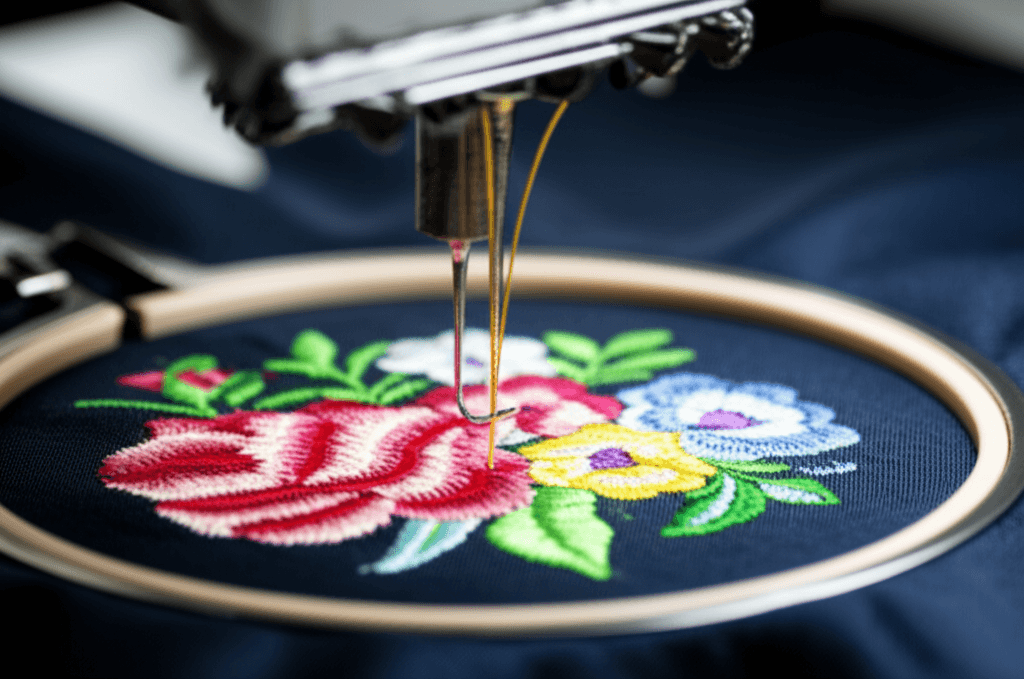
Stitch count is the total number of individual needle penetrations required to embroider your design. Every letter, line, and filled area is made up of hundreds or thousands of individual stitches.
A simple text-only logo might be 3,000 stitches. A complex, full-color detailed design could be 20,000+ stitches.
How Stitch Count Is Determined
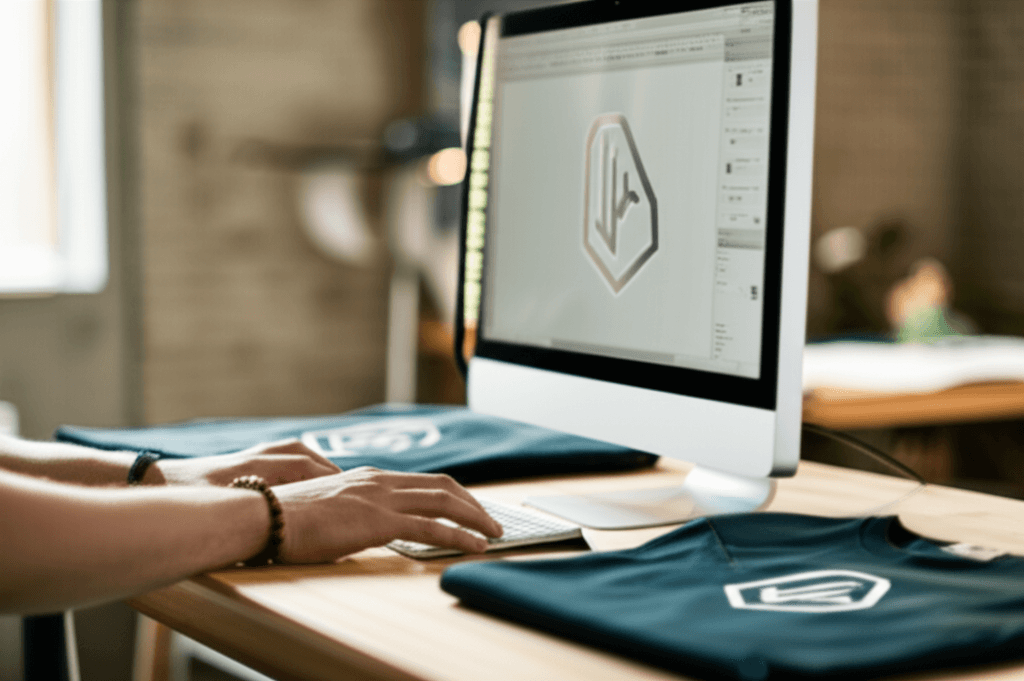
When you submit artwork for embroidery, a digitizer converts your design into a machine-readable stitch file (.DST, .PES, or similar format). During digitization, the software calculates:
- Which areas get filled stitches (solid coverage)
- Which areas get satin stitches (smooth columns)
- Which areas get running stitches (outlines)
- The density (stitches per inch) for each area
- The total stitch count
This digitized file controls the embroidery machine, telling it exactly where to place each stitch, in what order, and with what thread color.
Stitch Count Ranges
By Design Complexity
| Design Type | Typical Stitch Count | Example |
|---|---|---|
| Small text only | 1,500 - 3,000 | Company name in block letters |
| Simple logo (left chest) | 3,000 - 6,000 | Icon + company name |
| Medium logo | 6,000 - 10,000 | Detailed logo with tagline |
| Complex logo | 10,000 - 15,000 | Multi-color detailed emblem |
| Large detailed design | 15,000 - 25,000+ | Full-color illustration |
By Placement
| Location | Max Size | Typical Range |
|---|---|---|
| Left chest | 3.5" x 3.5" | 3,000 - 8,000 |
| Right chest | 3.5" x 3.5" | 3,000 - 8,000 |
| Hat front | 2.5" x 2.5" | 3,000 - 10,000 |
| Back yoke | 10" x 5" | 5,000 - 15,000 |
| Full back | 12" x 14" | 15,000 - 40,000+ |
| Sleeve | 3" x 3" | 2,000 - 6,000 |
How Stitch Count Affects Pricing
At French Press Custom, embroidery is priced per piece by quantity tier, and the base price includes up to 5,000 stitches. Designs above that add a small per-1,000-stitch charge, so a 12,000 stitch crest costs more per piece than a 4,000 stitch left-chest logo at the same quantity. Per-piece pricing steps down at 48, 100, 200, 400, and 1,000 pieces. The current tiers by quantity and stitch count, plus worked examples, are in our embroidery cost guide, and the instant quote tool prices your exact stitch count and quantity. Those are decoration costs only; add the blank garment cost for total per-unit pricing.
Why More Stitches Cost More
- Machine time: more stitches take longer to embroider. A 5,000 stitch design takes about 5 minutes per piece. A 15,000 stitch design takes 12-15 minutes.
- Thread consumption: more stitches use more thread
- Machine wear: higher stitch counts put more wear on needles and machine components
- Complexity: high stitch count designs require more careful quality control
The Digitizing Fee
Before any embroidery can happen, your artwork must be digitized, converted from a flat image into stitch instructions. At French Press Custom this is a flat, one-time fee per design regardless of complexity (the current figure is listed in the embroidery cost guide). Once digitized, the file is saved permanently. Reorders use the same file with zero additional digitizing charges.
Why Digitizing Is Not Just "Converting a File"
Digitizing is a skilled craft, not an automated process. A good digitizer:
- Chooses the right stitch types for each area (satin, fill, running)
- Sets appropriate density for the fabric type
- Plans the stitch sequence to minimize jumps and trims
- Adjusts for fabric stretch and puckering
- Ensures small text is readable
- Optimizes the design for machine production
Bad digitizing results in:
- Puckered fabric around the design
- Gaps between stitch areas
- Unreadable small text
- Thread breaks during production
- A final product that looks nothing like your artwork
At French Press Custom, our digitizing is done by experienced professionals, not automated software.
How to Keep Stitch Count (and Cost) Down
1. Simplify Your Design
The fastest way to reduce stitch count is to simplify the design for embroidery:
- Remove fine details that will not reproduce well in stitching anyway
- Use an embroidery-specific version of your logo (many brands have one)
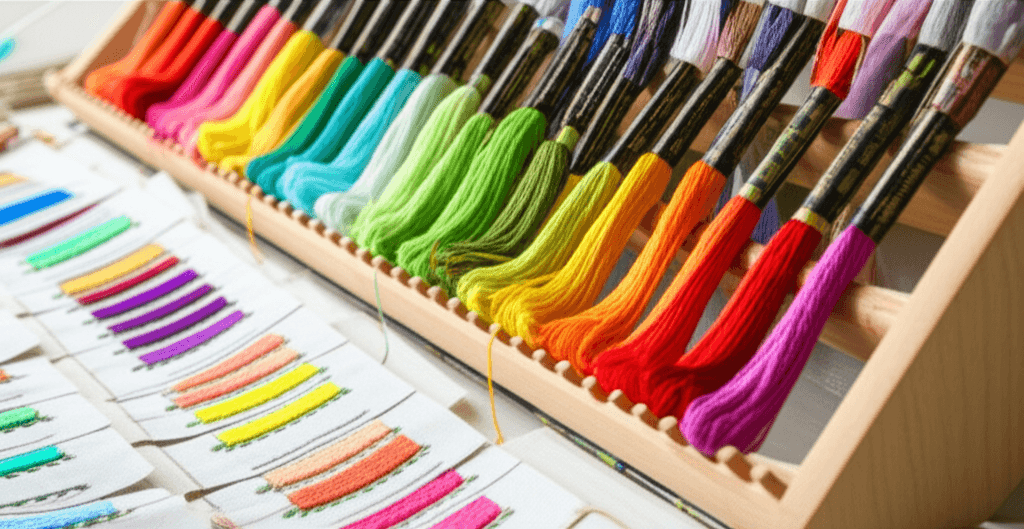
- Reduce the number of colors (fewer thread changes = faster production)
2. Use Outlines Instead of Fills
A filled circle might be 2,000 stitches. An outlined circle might be 200. If your design has large solid areas, consider using outlines or partial fills.
3. Reduce the Size
A 4-inch wide logo has twice the stitch area of a 3-inch wide logo. Reducing from 4 inches to 3.5 inches can reduce stitch count by 20-30%.
4. Use Running Stitch for Fine Lines
Running stitch (a single line of stitches) uses far fewer stitches than satin stitch (parallel lines creating a column). For thin lines and small details, running stitch is more efficient.
5. Let the Garment Color Do the Work
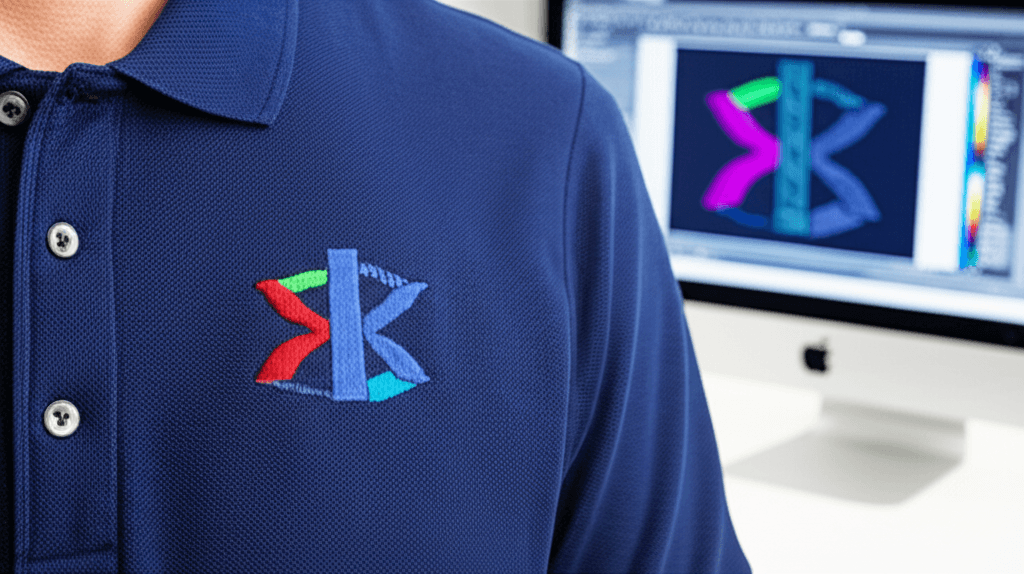
If your logo is on a navy polo, the navy background does not need to be stitched, the fabric IS the background. Only stitch the non-navy elements.
Common Questions
Does stitch count change between garment types?
The stitch count stays the same, but the density settings may be adjusted. Dense fabrics like denim handle high-density stitching well. Lightweight fabrics like performance poly need lower density to prevent puckering.
Can you embroider photographs?
Technically yes, but it requires extremely high stitch counts (30,000+), is expensive, and the result is an approximation, not a photograph. For photographic images, screen printing or DTG is a better choice.
What is the minimum readable text size?
For embroidery, the smallest readable text is about 0.25 inches (6mm) tall in a simple block font. Script fonts and thin serifs need to be larger, at least 0.35 inches.
How many colors can you embroider?
There is no hard limit, but each color requires a thread change (machine pause, operator swap). Most designs use 1-6 colors. More than 8 colors significantly increases production time and cost.
Get Your Stitch Count
Want to know the stitch count for your design before committing? Send us your artwork and we will provide a stitch count estimate and accurate pricing. No obligation.
Contact French Press Custom at (562) 407-3800, start an embroidery quote, or learn more about our custom embroidery services.