The Rise of Digital Garment Decoration
Digital printing has transformed the custom apparel industry over the past decade. Two methods now lead the digital decoration space: Direct-to-Garment (DTG) and Direct-to-Film (DTF). Both produce full-color, photo-quality prints without the setup costs of traditional screen printing, but they work in fundamentally different ways.
If you have been told "just go digital" without much explanation, this guide breaks down exactly how each method works, where each one excels, and how to choose the right one for your project.
Quick answer: the difference between DTG and DTF printing is where the ink ends up. DTG (direct to garment) sprays water-based ink directly into the fabric, which gives the softest feel on cotton. DTF (direct to film) prints your design onto a film that is then heat-pressed onto the garment, which makes it more durable, brighter on dark colors, and usable on almost any fabric. DTG wins on softness for cotton tees; DTF wins on versatility, durability, and dark-garment vibrancy.
How DTG Printing Works
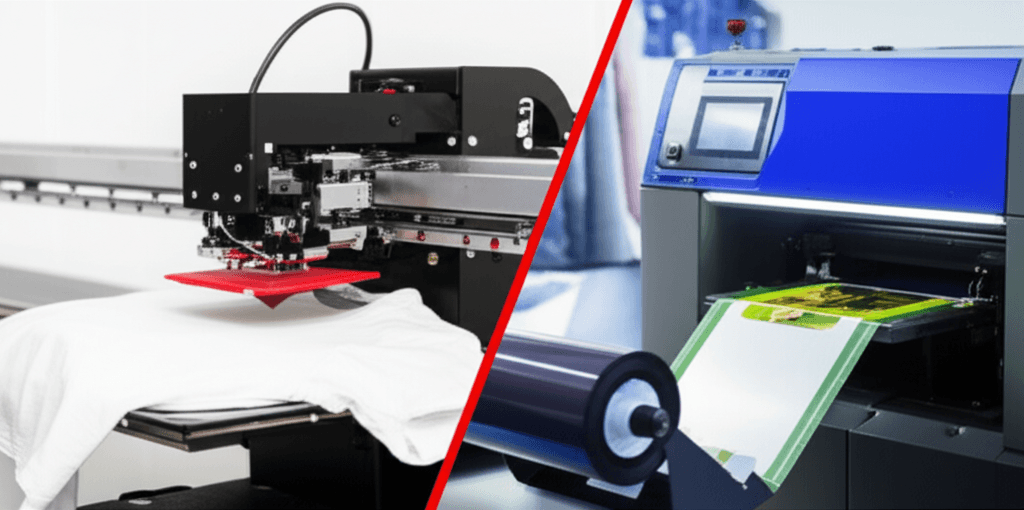
Direct-to-Garment printing works exactly like it sounds. A specialized inkjet printer sprays water-based textile ink directly onto the fabric surface. Think of it as a giant inkjet printer, but instead of paper, you load a t-shirt.
The DTG Process
- The garment is loaded onto a platen (flat printing surface)
- For dark garments, a white underbase layer is printed first
- Full-color CMYK inks are sprayed directly into the fabric fibers
- The garment goes through a heat press or conveyor dryer to cure the ink
The ink actually absorbs into the fibers rather than sitting on top. This gives DTG prints a soft, "no-feel" hand that many customers love. The print becomes part of the fabric itself.
How DTF Printing Works
Direct-to-Film printing takes an indirect approach. Instead of printing onto the garment, the design is printed onto a special PET film. A layer of adhesive powder is applied to the wet ink, and the film is cured. The finished transfer is then heat-pressed onto the garment.
The DTF Process
- The design is printed in full color onto PET transfer film
- Hot-melt adhesive powder is applied to the wet ink
- The film passes through a curing oven to melt and set the adhesive
- The finished transfer is heat-pressed onto the garment (300 to 330 degrees F)
- The film is peeled away, leaving the design bonded to the fabric
Unlike DTG, the ink and adhesive sit on top of the fabric rather than soaking into it. This creates a slightly different look and feel.
Head-to-Head Comparison
| DTG (Direct to Garment) | DTF (Direct to Film) | |
|---|---|---|
| How it prints | Ink sprayed directly into the fabric | Film transfer heat-pressed on top |
| Best fabrics | 100% cotton, high-cotton blends | Almost anything, including polyester and nylon |
| Feel | Softest, becomes part of the shirt | Thin smooth layer you can feel |
| Dark garments | Good, needs a white underbase | Excellent, consistently bright white |
| Durability | Good with proper care | Excellent, resists cracking and fading |
| Speed at volume | Slower, one garment at a time | Faster, transfers press in seconds |
| Minimum at French Press Custom | None, print a single shirt | 12 pieces |
| Setup fees | None | None |
Print Quality
DTG produces prints with exceptional detail and smooth gradients. Because the ink integrates into the fabric fibers, prints have a natural, organic look. Fine text and subtle color transitions render beautifully. On light-colored 100% cotton garments, DTG quality is hard to beat.
DTF also produces vivid, high-resolution prints with excellent color saturation. Colors often appear more vibrant and opaque than DTG, especially on dark garments, because the ink layer sits on top of the fabric rather than absorbing into it. Fine detail is strong, though extremely thin lines can sometimes be slightly thicker due to the adhesive layer.
Winner: DTG for soft hand on light cotton. DTF for vibrancy on dark fabrics.
Fabric Compatibility
DTG works best on 100% cotton and high-cotton blends. The water-based inks need natural fibers to absorb into. Performance on polyester is limited, and DTG is generally not recommended for nylon, leather, or synthetic fabrics.
DTF works on virtually any fabric. Cotton, polyester, nylon, blends, tri-blends, canvas, denim, even leather. Because the transfer bonds to the surface rather than absorbing into it, the fabric composition matters much less.
Winner: DTF, and it is not close. The fabric versatility of DTF is its single biggest advantage.
Feel and Hand
DTG is famous for its soft hand. On white or light garments (where no white underbase is needed), a DTG print is almost imperceptible to the touch. On dark garments, the white underbase adds a slight layer, but it is still softer than most alternatives.
DTF has a noticeable hand. The ink-plus-adhesive layer creates a thin, smooth film on the surface of the fabric. It is not heavy or plasticky like low-quality heat transfers, but you can feel it. Some customers describe it as similar to a thin vinyl decal.
Winner: DTG for softness. If feel is your top priority, DTG on cotton is the way to go.
Durability and Wash Performance
DTG prints hold up well through washing when properly cured, but they can fade gradually over many wash cycles, especially on dark garments. Following care instructions (wash inside-out, cold water, tumble dry low) extends the life significantly.
DTF transfers are remarkably durable. The adhesive bond is strong, and prints tend to maintain color vibrancy through many more wash cycles than DTG. The film layer also resists cracking better than screen printing plastisol in many cases.
Winner: DTF for long-term durability.
Cost and Minimums
DTG has no setup costs and no minimum order quantities. You can profitably print a single shirt. However, DTG printers are expensive to maintain, pretreatment adds labor, and production speed is relatively slow (1 to 3 minutes per garment depending on complexity and size).
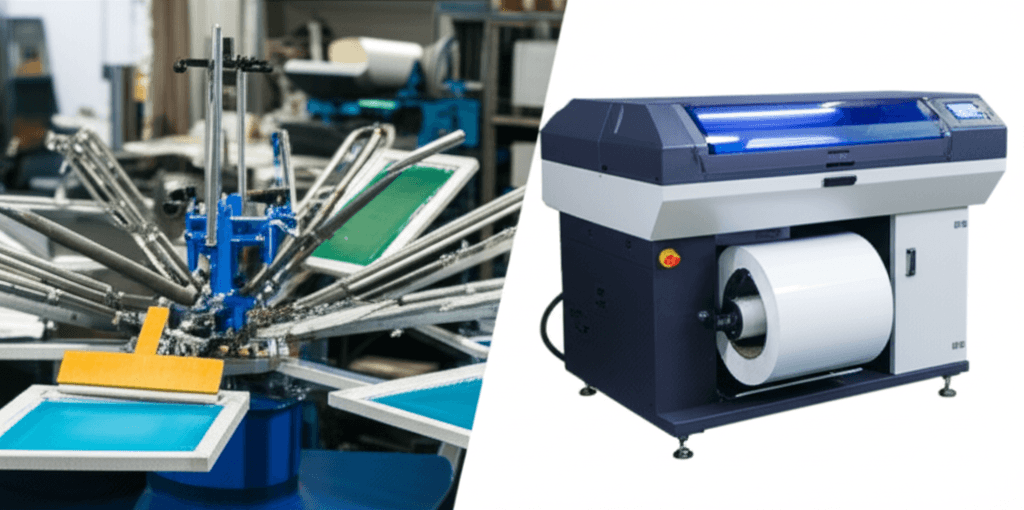
DTF also has no screens or setup fees, and transfers can be printed and stored ahead of time. Production is often faster because transfers can be batch-printed on continuous film rolls and pressed onto garments quickly. At low quantities (1 to 35 pieces), DTF is typically competitive with or cheaper than DTG.
Winner: DTF for cost efficiency on small orders, especially on dark garments. DTG is comparable on light garments.
Production Speed
DTG prints one garment at a time. Pretreatment, printing, and curing each garment is a sequential process. For large orders, this can become a bottleneck.
DTF transfers are printed in advance and pressed onto garments in seconds. A skilled operator can press 60 or more garments per hour. For larger orders, this speed advantage is significant.
Winner: DTF for speed, especially at volume.
Color Accuracy and White Ink
DTG handles white ink on dark garments, but the white underbase is one of the most challenging aspects of DTG printing. Achieving consistent white opacity requires careful pretreatment, calibration, and maintenance. Inconsistent white is the most common DTG quality issue.
DTF produces consistently bright white because the white ink layer is printed onto film under controlled conditions, not onto an absorbent fabric surface. This makes DTF particularly reliable on black and dark-colored garments.
Winner: DTF for consistency on dark garments.
When to Choose DTG
DTG is the right choice when:
- You are printing on 100% cotton or high-cotton blend garments
- Soft hand is a priority (the print should feel like part of the shirt)
- You are printing on light-colored garments where no underbase is needed
- You want prints that look and feel as natural as possible
- Your design has subtle gradients or skin tones that need to blend into the fabric
Ideal DTG Projects
- Artist and designer sample runs on quality cotton tees
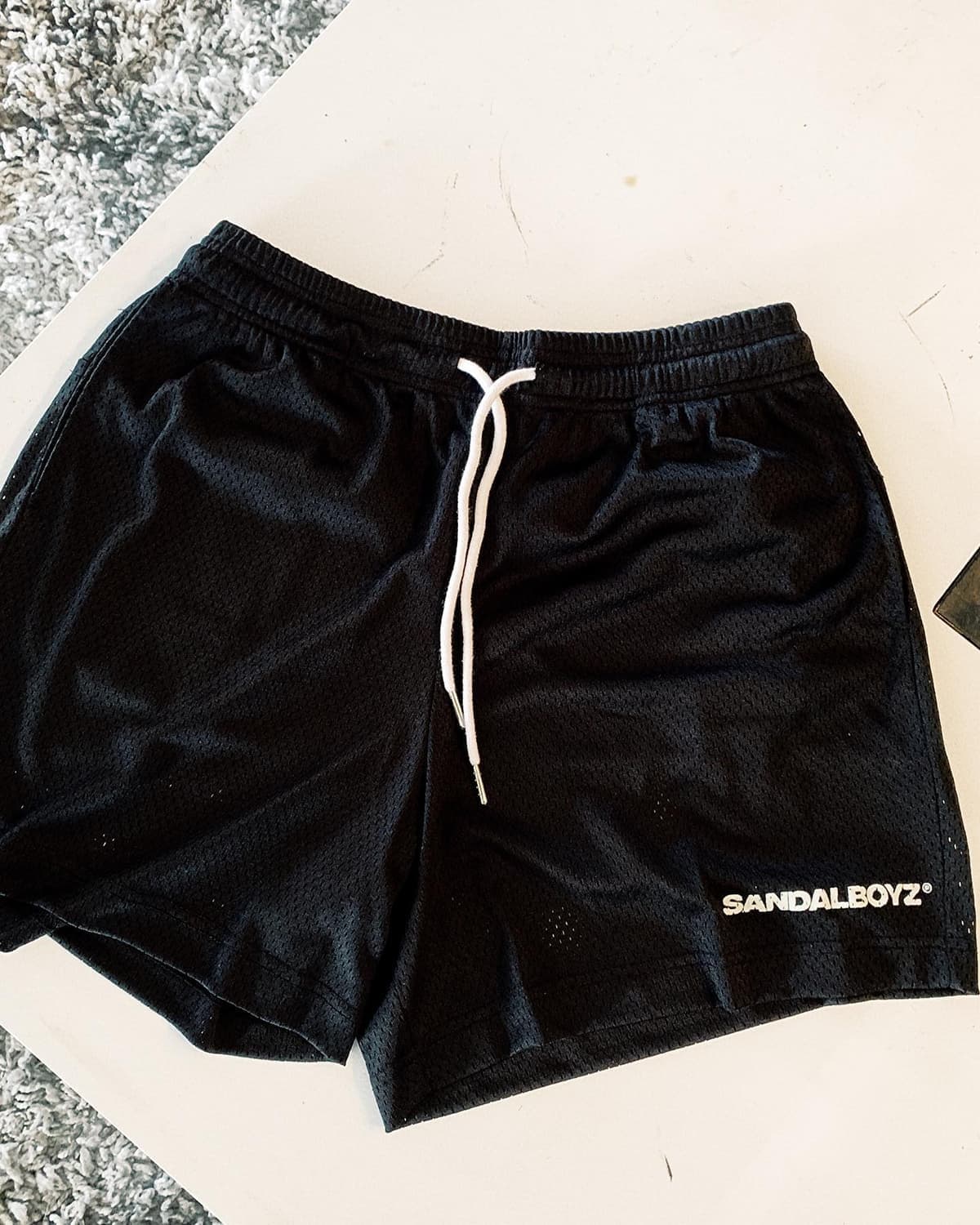
- Small-batch streetwear on Comfort Colors or Bella+Canvas blanks
- Photo-realistic prints on white or light tees
- Single promotional pieces or personal projects
When to Choose DTF
DTF is the right choice when:
- You need to print on polyester, blends, nylon, or performance fabrics
- You are printing on dark garments and need reliable white opacity
- Durability and wash performance are top priorities
- You need fast turnaround or larger production runs
- You want consistency across different fabric types in the same order
Ideal DTF Projects
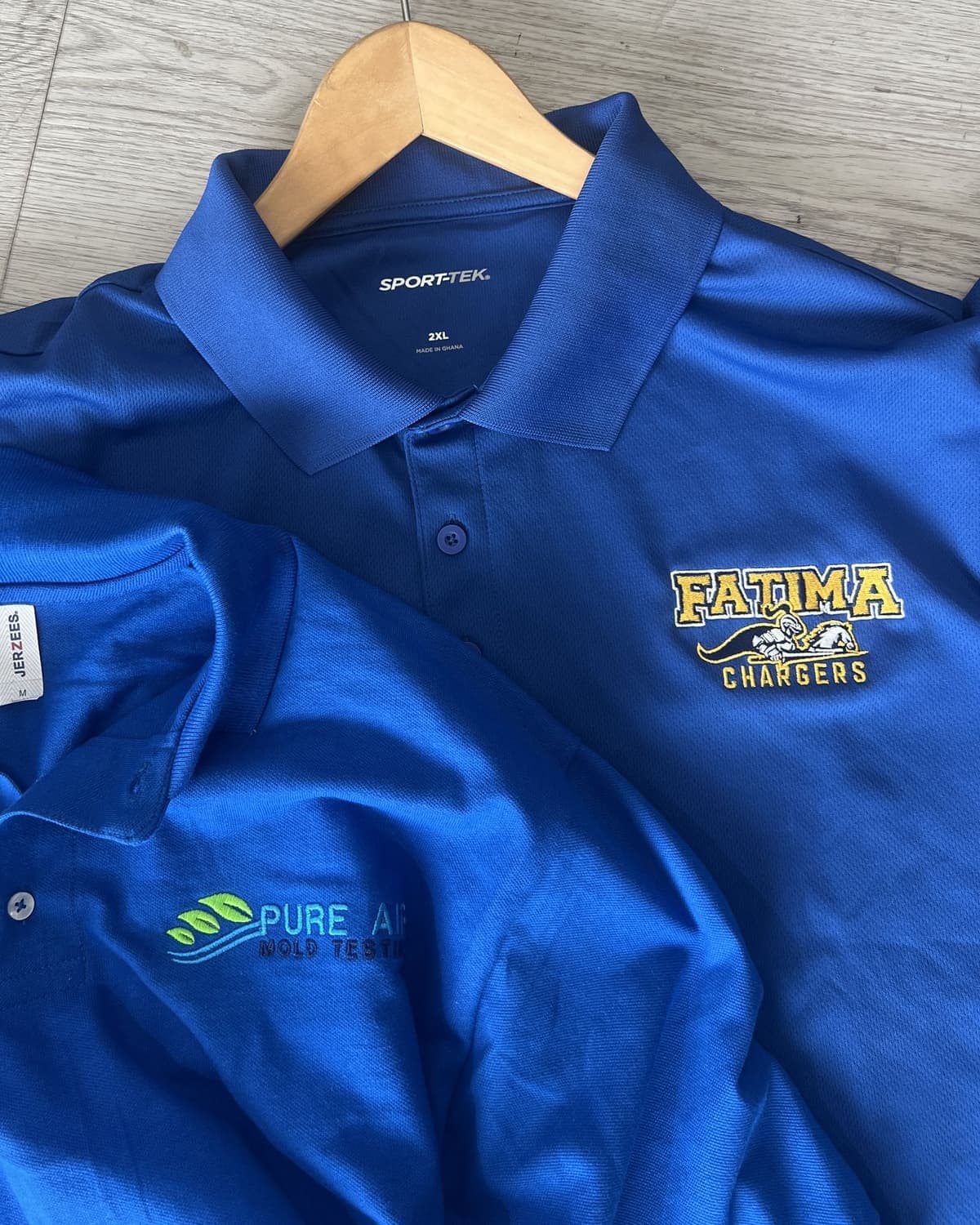
- Sports uniforms and athletic wear (polyester and performance blends)
- Large orders on dark-colored blanks
- Mixed orders with different fabric types
- School spirit wear where durability through student use is essential
- Hats, bags, and non-traditional substrates
Can You Use Both?
Absolutely. Many print shops, including ours, use both methods depending on the project. A streetwear brand might use DTG for their premium cotton tees and DTF for their polyester basketball shorts. A school store might use DTF for everything because of the fabric variety and durability requirements.
The best approach is to tell your printer what you need, including the blanks, quantities, design complexity, and priorities, and let them recommend the method that delivers the best result.
What DTG and DTF Cost at French Press Custom
Both methods skip the screen setup that traditional screen printing builds into its per-piece price, which is exactly why they shine on small orders.
- DTG: no minimum and no setup fees. Order 1 shirt or 20. This is our standard recommendation for any cotton order under 36 pieces.
- DTF: 12-piece minimum, no setup fees. The go-to for polyester, performance fabrics, and mixed-fabric orders.
- At 36+ pieces, ask about screen printing. Once quantities clear our 36-piece-per-design screen print minimum, screen printing usually beats both digital methods on per-piece price for designs with a handful of colors.
For real numbers, our LA custom apparel price index publishes median all-in per-piece prices from hundreds of actual quotes, or you can price your exact job in about a minute with the instant quote tool.
Frequently Asked Questions
What is the difference between DTG and DTF printing?
DTG prints ink directly into the garment fabric, while DTF prints onto a transfer film that is heat-pressed onto the garment. That one difference drives everything else: DTG feels softer and suits cotton, while DTF is more durable, works on nearly any fabric, and prints brighter on dark garments.
Is DTG or DTF better?
Neither is better across the board. Choose DTG for soft-hand prints on cotton, especially light garments and designs with gradients or skin tones. Choose DTF for polyester and performance fabrics, dark garments, mixed-fabric orders, and jobs where wash durability matters most.
Which lasts longer, DTG or DTF?
DTF generally lasts longer. The ink and adhesive bond sits on top of the fabric and holds color through more wash cycles, while DTG can fade gradually on dark garments. A properly cured DTG print on cotton still holds up well when washed inside-out in cold water.
Is DTG or DTF cheaper?
At small quantities they are usually close, and neither carries setup fees. DTF often edges out DTG on dark garments because white ink lays down more efficiently on film. At French Press Custom, DTG has no minimum at all and DTF starts at 12 pieces, so for one-offs and very small runs DTG is the practical choice.
What is the difference between DTG and a heat press?
A heat press is a tool, not a printing method. Both DTF and vinyl transfers use a heat press to apply the design, while DTG prints ink straight into the shirt and only uses heat to cure it. When people compare "DTG vs heat press" they usually mean DTG versus heat-applied transfers like DTF or vinyl, and the comparison above covers exactly that.
Make the Right Choice for Your Project
Both DTG and DTF are powerful digital decoration methods. Neither one is universally "better." The right choice depends on your fabric, your design, your quantity, and what matters most to you, whether that is softness, durability, speed, or versatility.
French Press Custom offers both DTG and DTF printing in-house, along with screen printing, embroidery, and vinyl heat transfer. Our team will recommend the best method for your specific project so you get the quality, feel, and value you expect.
Get an instant quote or call (562) 407-3800 to discuss your project with our team.