Screen Printing Ink Types: A Complete Guide
Not all screen printing inks are the same. The ink type your printer uses affects how your design looks, feels, washes, and lasts. At French Press Custom, we stock and use every major ink type — because different projects demand different solutions.
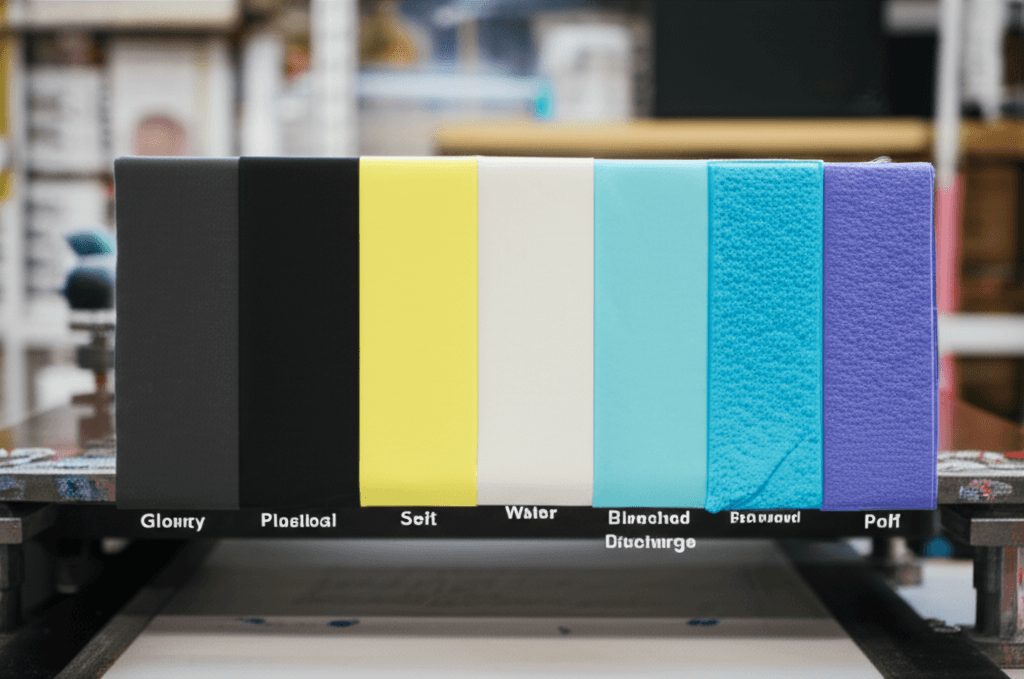
Here is a deep dive into the four main screen printing ink types and when to use each one.
Plastisol Ink (The Industry Standard)
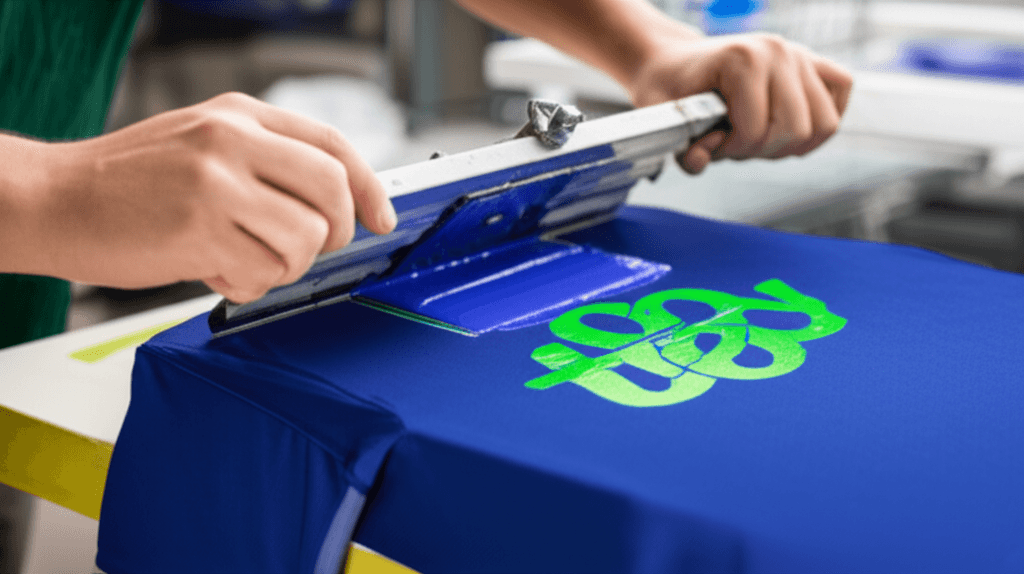
Plastisol is a PVC-based ink that sits on top of the fabric and cures at approximately 320 degrees F. It is the most widely used screen printing ink in the world, and for good reason.
Characteristics
- Opacity: Excellent — covers dark garments with one or two passes
- Hand feel: Noticeable — you can feel the ink on the fabric
- Durability: Outstanding — properly cured plastisol lasts 50+ washes
- Color vibrancy: Extremely vibrant, including on dark shirts
- Cure method: Heat (conveyor dryer at 320°F)
Best For
- Dark garments where opacity matters
- Bold, graphic designs with solid color fills
- High-volume production (easy to work with, consistent results)
- Beginners (most forgiving ink to print with)
- Any project where durability is the top priority
Limitations
- Heavier hand feel compared to water-based and discharge
- Not breathable in the printed area
- PVC-based (environmental concern for some clients)
- Can crack if severely over-dried or mistreated
Cost
Standard pricing — plastisol is included in base screen printing quotes.
Water-Based Ink (The Soft Alternative)
Water-based ink absorbs into the fabric fibers rather than sitting on top. It produces a much softer print with a "no feel" hand, especially on light-colored garments.
Characteristics
- Opacity: Low on dark garments, great on lights
- Hand feel: Very soft — almost invisible on the fabric
- Durability: Good with proper curing (30-40+ washes)
- Color vibrancy: Slightly muted compared to plastisol
- Cure method: Heat + evaporation (requires more careful curing)
Best For
- Light-colored garments (white, heather gray, pastels)
- Fashion and retail brands that value soft hand feel
- Eco-conscious clients (no PVC, less chemical waste)
- Vintage or distressed design aesthetics
- Athletic wear where breathability matters
Limitations
- Poor opacity on dark fabrics (not recommended for black tees)
- Harder to print consistently (dries in the screen)
- Longer production time per run
- Slightly less vibrant than plastisol
Cost
Add $0.50-1.00 per color per piece compared to standard plastisol.
Discharge Ink (The Premium Choice)
Discharge ink chemically removes the dye from the fabric and replaces it with pigment. The result is a print that is literally part of the fabric — zero hand feel, zero raised texture.
Characteristics
- Opacity: Works by removing dye, not adding layers
- Hand feel: Zero — the softest possible screen print
- Durability: Excellent — cannot crack because there is no ink layer
- Color vibrancy: Rich but slightly muted, vintage quality
- Cure method: Heat activates the chemical discharge agent
Best For
- Dark cotton garments (navy, black, forest green)
- Premium merch and fashion brands
- Vintage and retro design aesthetics
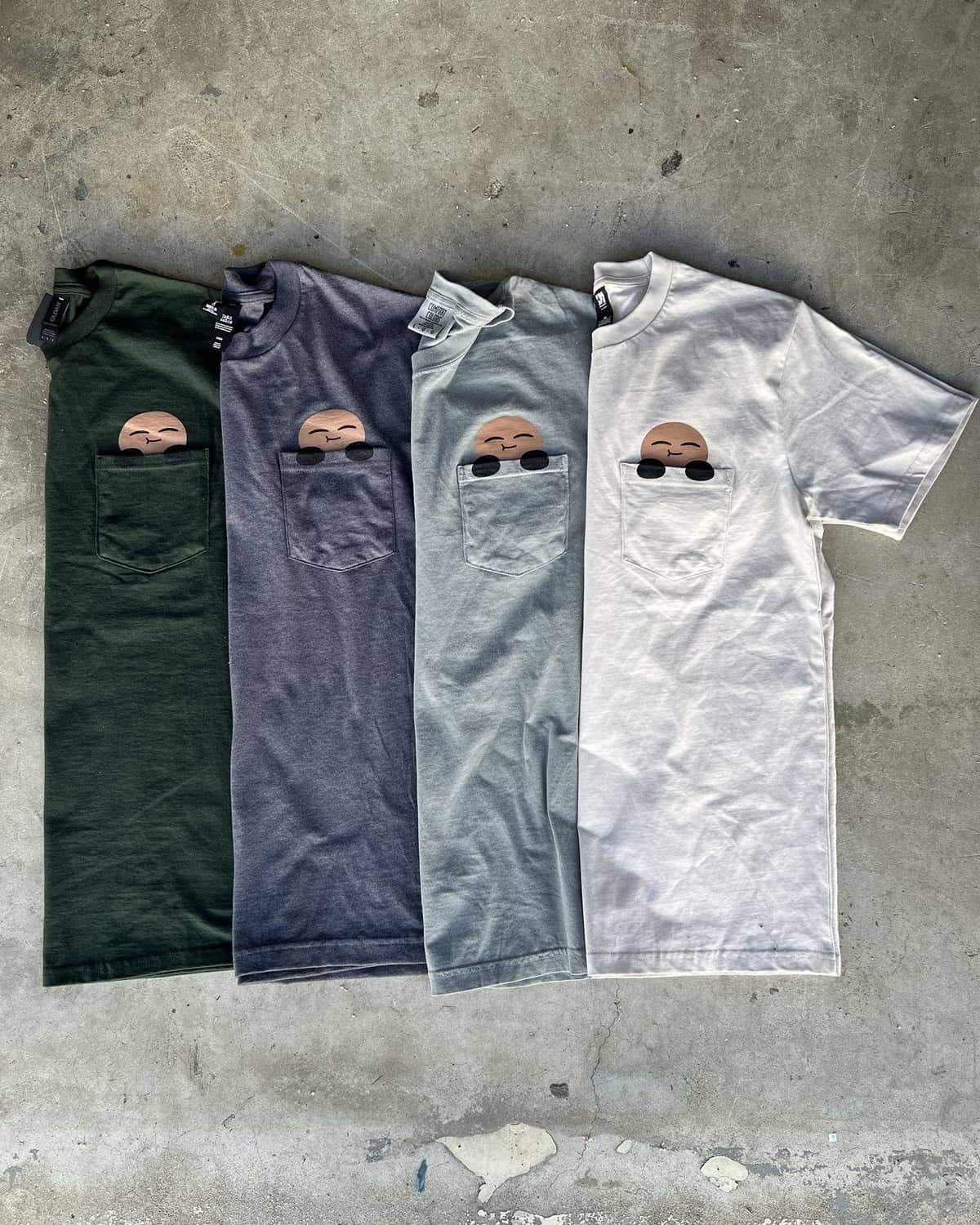
- Comfort Colors and garment-dyed tees
- Any project where the softest possible print is the goal
Limitations
- Only works on reactive-dyed cotton (not polyester, not white)
- Color results can vary between garment brands and dyes
- Cannot achieve neon or extremely bright colors
- Slightly unpredictable — test prints recommended
- Uses chemicals that require proper ventilation
Cost
Add $0.50-1.00 per color per piece compared to standard plastisol.
Puff Ink (The Textured Effect)
Puff ink is a plastisol-based ink with a foaming agent that expands when heated. The result is a raised, three-dimensional texture that adds visual and tactile interest.
Characteristics
- Opacity: Good (plastisol base)
- Hand feel: Raised, puffy, foam-like texture (that is the point)
- Durability: Good, though the raised surface wears over time
- Color vibrancy: Good, similar to standard plastisol
- Cure method: Heat — the foaming agent activates at cure temperature
Best For
- Adding dimension to logos and text
- Streetwear and fashion brands
- Accent elements (combine with flat plastisol for contrast)
- Creating premium, tactile designs
- Making designs stand out visually and physically
Limitations
- Not suitable for fine detail (puffing distorts small elements)
- Best for simple shapes, bold text, and outlines
- Cannot be used for full-coverage designs
- Adds significant texture that may not suit every design
Cost
Add $1.25-2.00 per puff ink location.
Other Specialty Inks
Metallic / Shimmer
Contains reflective particles for a metallic sheen. Available in gold, silver, copper, and custom colors. Adds $2.00-4.00 per location.
Glow-in-the-Dark
Photoluminescent ink that charges in light and glows in darkness. Popular for events, concerts, and novelty items. Adds $1.00-1.50 per location.
Foil
A two-step process: print adhesive, then press metallic foil. Creates a mirror-like metallic finish. Adds $3.00-5.00 per location.
High-Density
Extra-thick plastisol that creates a raised rubber-like texture. More precise than puff, with sharp edges. Popular for streetwear and premium brands.
Suede / Velvet
Creates a soft, fuzzy texture similar to suede or velvet fabric. Novel tactile effect for premium applications.
Ink Type Comparison Table
| Feature | Plastisol | Water-Based | Discharge | Puff |
|---|---|---|---|---|
| Softness | 4/10 | 8/10 | 10/10 | 2/10 (raised) |
| Opacity | 10/10 | 5/10 | 8/10 | 8/10 |
| Durability | 10/10 | 7/10 | 9/10 | 7/10 |
| Vibrancy | 10/10 | 7/10 | 7/10 | 8/10 |
| Dark fabrics | Excellent | Poor | Excellent | Good |
| Light fabrics | Excellent | Excellent | N/A | Good |
| Cost | Base | +$0.50-1 | +$0.50-1 | +$1.25-2 |
| Best for | Everything | Soft prints | Premium feel | 3D effect |
How to Choose
Ask Yourself:
- What color is the garment? Dark → plastisol or discharge. Light → water-based or plastisol.
- How important is hand feel? Critical → discharge or water-based. Not important → plastisol.
- What is the design? Simple bold graphics → any ink. Fine detail → plastisol or water-based.
- What is the budget? Standard → plastisol. Premium → discharge. Special effect → puff/metallic.
- What is the fabric? Cotton → any ink. Polyester → plastisol. Garment-dyed → discharge.
Mix and Match
At French Press Custom, we often combine ink types on the same print:
- Plastisol base + puff accent — flat design with raised text
- Discharge body + plastisol highlight — soft print with one pop color
- Water-based + metallic spot — soft hand with metallic logo element
Not sure which ink is right? Send us your design and we will recommend the best approach. Call (562) 407-3800 or request a free quote online.
Related service: See our specialty inks service page for puff, foil, glow and high-density printing, or get a free quote.
Frequently Asked Questions
What is the difference between plastisol and water-based ink?
Plastisol sits on top of the fabric and cures at roughly 320 degrees, giving excellent opacity on dark garments and outstanding durability with a noticeable hand feel. Water-based ink absorbs into the fibers for a very soft, almost invisible print, but it has poor opacity on dark fabrics.
Which screen printing ink feels the softest?
Discharge ink. It chemically removes the dye from the fabric and replaces it with pigment, so the print becomes part of the fabric with zero hand feel and no ink layer that can crack. It only works on reactive-dyed cotton, not polyester and not white garments.
What is puff ink and when should I use it?
Puff is a plastisol-based ink with a foaming agent that expands under heat into a raised, three-dimensional texture. It suits bold text, simple shapes and outlines used as accents, but the puffing distorts fine detail, so it is not the right call for small elements or full-coverage designs.
How do I pick the right ink for my job?
Start with the garment color and the fabric. Dark garments point to plastisol or discharge, light garments to water-based or plastisol, polyester to plastisol, and garment-dyed blanks to discharge. Then weigh how much hand feel matters against your budget and the level of detail in the design.