HTV, short for heat transfer vinyl, is a thin sheet of colored vinyl with a heat-activated adhesive on the back. We cut your design out of the sheet, peel away the extra, and press what is left onto the garment with heat and pressure. It is the cleanest way to put names, numbers, and simple logos on almost any fabric, and at French Press Custom heat transfer vinyl starts at just 6 pieces.
This guide covers how we actually make an HTV order in our Santa Fe Springs shop, the vinyl types worth knowing, where vinyl shines, where it does not, and when DTF or screen printing is the better call.
How is heat transfer vinyl made and applied?
Every HTV job goes through the same six steps at our shop:
- Vector artwork. Vinyl is cut along paths, so the design has to be vector (Illustrator, EPS, SVG, or a PDF with live vector shapes). Your artwork is kept on file for reorders.
- Cutting. A computer-controlled vinyl plotter cuts the design through the vinyl layer but not the clear carrier sheet underneath. Text and shapes are mirrored so they read correctly after pressing.
- Weeding. Our team peels away every piece of vinyl that is not part of the design, by hand, including the insides of letters. This is where small text and thin lines get tested.
- Placement. The weeded design, still on its carrier, is positioned on the garment. Front, back, sleeve, and leg placements each get measured so every piece in the run matches.
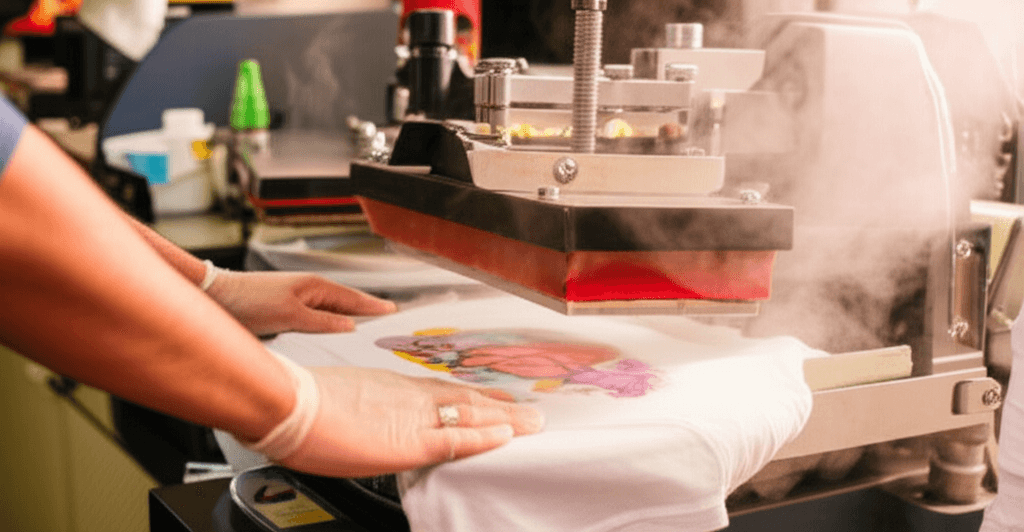
- Pressing. A commercial 16x20 inch heat press with digital temperature and even platen pressure bonds the vinyl to the fabric. For sleeves, hats, and awkward spots, we use a swing-away press that sets the garment flat without crushing seams.
- Peeling. The carrier comes off, hot or cold depending on the vinyl, and the design stays on the shirt.
Multi-color designs repeat steps 2 through 5 for each color, layered or set side by side. That is the main reason vinyl is best kept to one to three colors.
What types of HTV can you choose from?
We stock 50+ standard colors and eight specialty vinyl types. The ones customers ask about most:
| Vinyl type | Look and feel | Good for |
|---|---|---|
| Standard | Smooth, slight sheen | Names, numbers, everyday logos |
| Matte | Flat, no shine | Logos that should look printed |
| Stretch | Thin, flexes with fabric | Spandex, compression wear, leggings |
| Glitter | Sparkle finish, slight texture | Cheer, dance, spirit wear |
| Metallic and foil | Mirror-like shine | Awards, fashion pieces, accents |
| Reflective | Bright when hit by headlights | Safety crews, running gear |
| Flock | Soft, raised, felt-like | Retro lettering, premium names |
| Patterned | Pre-printed camo, plaid, and more | Fun accents without extra layers |
Specialty vinyls change the look more than any ink could on a short run, which is part of why HTV stays popular for school and team gear. If you want a printed metallic look on a bigger run instead, metallic screen print ink is available at an extra charge quoted on the estimate.
What is HTV best for?
Names and numbers
This is vinyl's home turf. Every piece can carry a different name or number with no new setup, because each one is simply cut on its own. A roster of 18 players, a crew of 9 technicians, or a staff of coaches with titles all come out of the same workflow. We pair HTV names and numbers with a screen printed or DTF team logo all the time. Our team jersey ordering guide covers that whole process.
Small runs of simple logos
Vinyl starts at 6 pieces, so a handful of work shirts with a one-color logo is easy. For anything under 6, or for full-color art, DTG covers you with no minimum.
Performance and synthetic fabrics
HTV sticks well to polyester, nylon, and spandex blends, which is why it is common on jerseys, warm-ups, and athletic shorts. On stretchy fabric we use stretch-rated vinyl so the design moves with the garment instead of cracking. For more on synthetics, see our guide to printing on polyester and performance wear.
Add-ons later in the season
When new players join or new hires start, matching names and numbers can go on a follow-up order without reprinting the originals. Your artwork stays on file, and vinyl starts at 6 pieces, so it pays to batch a few late additions together.
Where does HTV fall short?
Vinyl is a great tool with clear limits. We will tell you when a different method will look or wear better.
- Many colors: every color is a separate cut, weed, and press. Past three colors the labor climbs fast and the stack of layers gets stiff. Full-color art belongs on DTF transfers or DTG.
- Large solid areas: a big chest graphic in vinyl feels like a plastic panel and does not breathe. A screen print with water-based ink, or a DTF transfer, wears much better at that size.
- Photos and gradients: vinyl is solid color by nature, so it cannot reproduce shading.
- Very fine detail: hairline strokes and tiny text are hard to weed cleanly and are the first spots to lift. Keep strokes thick and letters readable.
- Big quantities of the same design: once each design reaches 36 pieces, screen printing usually beats vinyl on price and durability.
How durable is heat transfer vinyl?
Pressed at the right temperature, time, and pressure, quality HTV holds through a full season of weekly washing and much longer with good care. When vinyl fails, it fails at the edges or the adhesive, and both come down to how it was applied, which is why we press every piece on calibrated commercial equipment instead of a craft press.
To make HTV last:
- Wash inside out in cold water.
- Tumble dry on low or hang dry.
- Skip bleach and fabric softener.
- Never iron directly on the vinyl.
- Wait a day after pressing before the first wash.
For something that will be washed hundreds of times, a cured plastisol screen print is still the durability benchmark. For names, numbers, and small logos on uniforms, vinyl is more than up to the job.
HTV vs DTF vs screen printing: which should you pick?
| Question | HTV | DTF | Screen printing |
|---|---|---|---|
| Where it starts | 6 pieces | 12 pieces | 36 per design |
| Colors | 1 to 3 works best | Unlimited | Each color adds a screen |
| Different name on every piece | Yes, easily | Possible, more steps | Not practical |
| Big solid graphics | Feels heavy | Good | Best |
| Polyester and nylon | Yes | Yes | Yes, with low-bleed ink |
| Feel | Smooth layer on top | Thin flexible film | Ink layer, softest with water-based |
A simple rule of thumb: personalization goes on vinyl, full-color art goes on DTF, and bulk runs of a set design go on screen printing. Our print method comparison walks through all five methods we run.
Can you put HTV on hats?
Yes. Our swing-away press handles caps, and vinyl works well for simple text or numbers on the front panel. Hat orders start at 24 pieces whatever the decoration, so plan a hat run separately from a small shirt order. Most customers choose embroidery on hats for the premium look; browse styles on our hats page.
How do you order HTV from French Press Custom?
Send us vector artwork, the garment, quantities by size, and a roster spreadsheet if every piece gets a different name or number (double check spelling; we press exactly what the list says). We send an estimate, a 50% deposit starts the job, and you approve a digital proof before anything is cut. The balance is due before pickup at 14130 Rosecrans Ave in Santa Fe Springs, Monday through Friday 8am to 4pm. We also ship UPS and FedEx to street addresses (no PO boxes) across Los Angeles, Orange County, and beyond.
See our heat transfer service page for more, or price your order in the quote builder.
Frequently asked questions
What is the minimum order for heat transfer vinyl?
Heat transfer vinyl starts at 6 pieces. Hats are the exception: a hat order starts at 24 pieces whatever the decoration. If you need fewer than 6 shirts, DTG printing has no minimum.
Does each name and number cost extra setup?
No new setup is needed for each name or number. Every piece is cut individually from your roster, so a team can have a different name on every jersey on the same order.
Will heat transfer vinyl crack or peel?
Properly pressed HTV holds up through regular washing. Peeling almost always traces back to low heat, short press time, or uneven pressure, so professional application and cold, inside-out washing make the biggest difference.
Can HTV go on polyester jerseys?
Yes. Vinyl bonds well to polyester, nylon, and spandex blends. We use stretch-rated vinyl on stretchy fabrics so the design moves with the garment.
When should I choose DTF instead of vinyl?
Choose DTF when the design has more than three colors, gradients, or photo detail. DTF prints full color on film and presses it on, so color count does not change the work the way it does with vinyl.