The short answer: polyester and performance fabrics print best with DTF transfers, low-bleed screen printing, or embroidery, with heat transfer vinyl for names and numbers. DTG, the method that shines on cotton, is the wrong match for slick synthetics. The right choice comes down to your quantity, your color count, and how dark and stretchy the garment is.
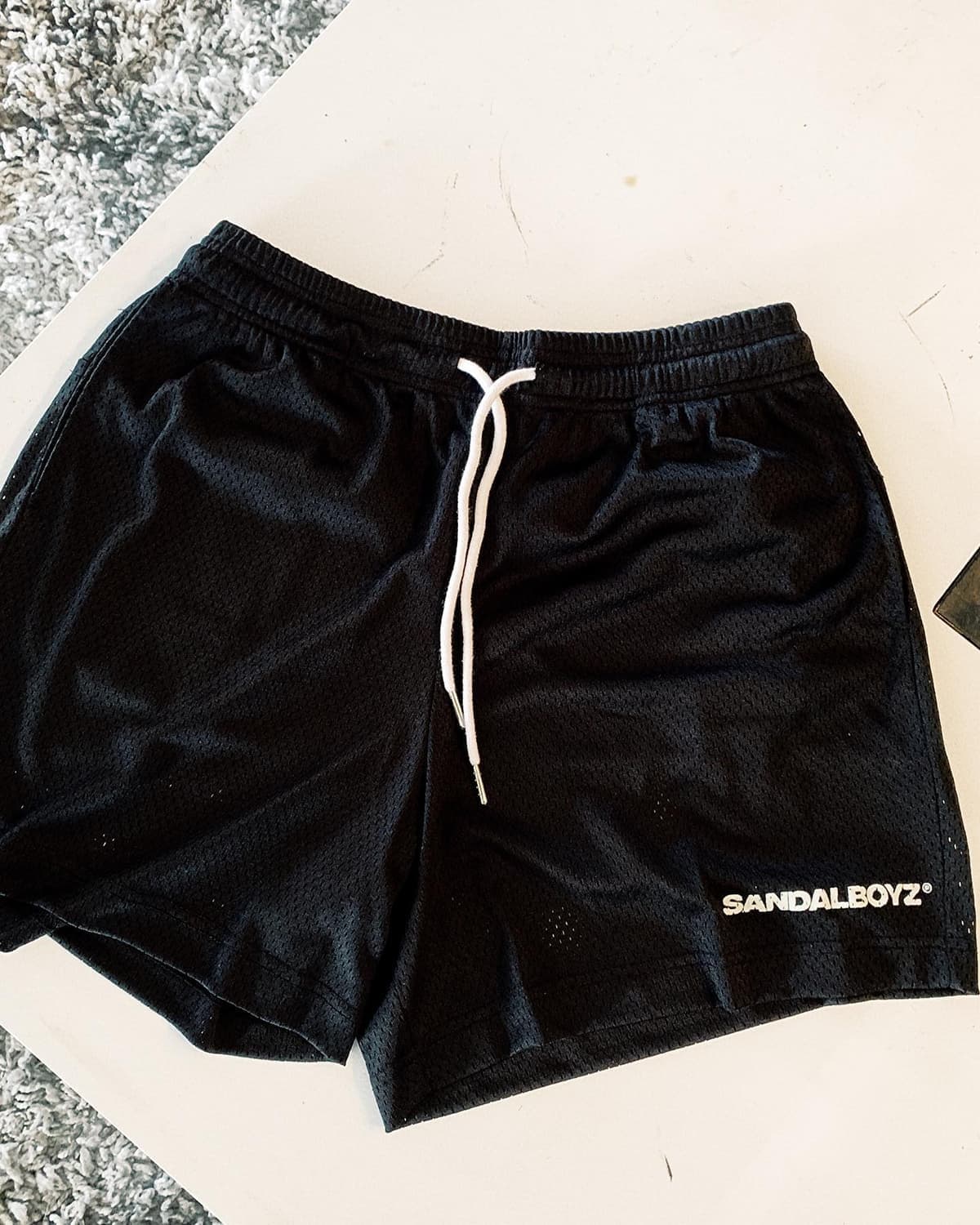
French Press Custom does not offer sublimation, so if you arrived here looking for seam-to-seam dyed garments, this guide covers what we can do on polyester instead, and it is a lot. We print performance tees, jerseys, mesh shorts, quarter-zips and moisture-wicking polos regularly at our shop at 14130 Rosecrans Ave in Santa Fe Springs, for teams, gyms, run clubs and companies across Los Angeles and Orange County.
Why is polyester harder to print than cotton?
Cotton is absorbent and heat tolerant. Ink soaks into the fibers, and the shirt shrugs off the heat it takes to cure that ink. Polyester behaves differently on almost every count:
- Dye migration. Polyester is colored with disperse dyes that can reactivate under heat and wick into the print. That is the classic white logo that turns pink on a red jersey.
- Heat sensitivity. Synthetic fibers can scorch, go shiny or change texture at temperatures cotton handles easily.
- Slick surface. Ink sits on top of the fiber instead of soaking in, so adhesion depends on the right ink and a full cure.
- Stretch. Performance knits and spandex blends move a lot. A stiff print film cracks when the fabric stretches past it.
- Finishes. Many moisture-wicking garments carry a surface treatment that can resist ink.
None of these are deal breakers. They just mean the decoration method and the process have to be chosen for the fabric, not copied from a cotton tee job.
Which decoration methods work on polyester?
| Method | Works on polyester? | Best for | Minimum |
|---|---|---|---|
| DTF transfers | Yes, any color and blend | Full-color art, small to mid runs, dark jerseys | 12 pieces |
| Screen printing (low-bleed ink) | Yes, with process controls | 1 to 4 color logos at volume | 36 pieces per design |
| Embroidery | Yes, very well | Polos, quarter-zips, jackets, hats | 24 pieces |
| Heat transfer vinyl (HTV) | Yes | Individual names and numbers | 6 pieces |
| DTG | Not recommended | Save it for cotton | None, but use cotton |
DTF transfers
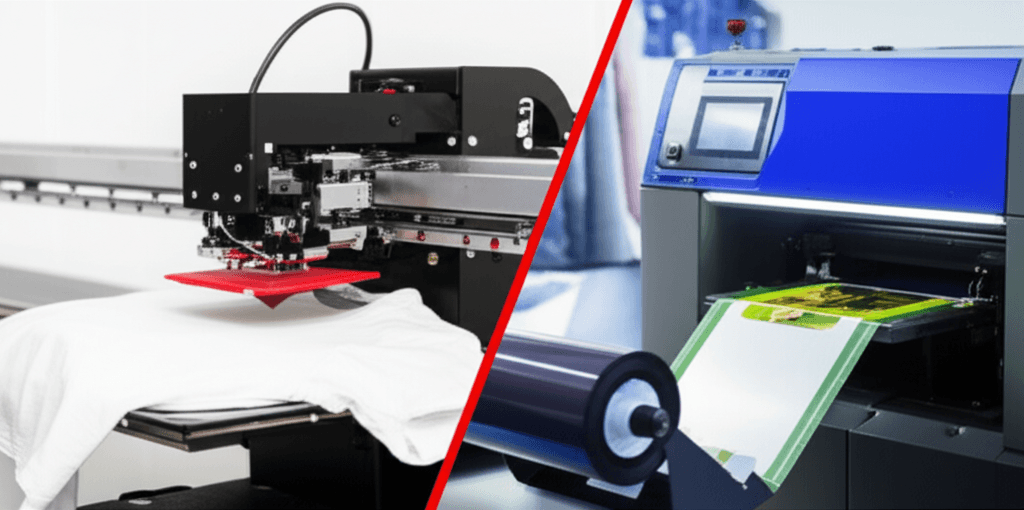
DTF prints your design onto film with a white ink layer behind the color, coats it with an adhesive powder, cures it, and heat presses it onto the garment. Because the transfer carries its own white, colors stay bright on black, navy and red polyester. The finished print is thin and flexible, so it moves with stretchy knits. In our shop the film runs on a 24 inch commercial DTF printer and is pressed on digital heat presses with controlled temperature and pressure, plus a swing-away press for sleeves and awkward placements.
DTF is our default recommendation for full-color, gradient or photographic artwork on polyester, and for runs between 12 and a few hundred pieces. See the DTF cost guide for current pricing by quantity.
Low-bleed screen printing
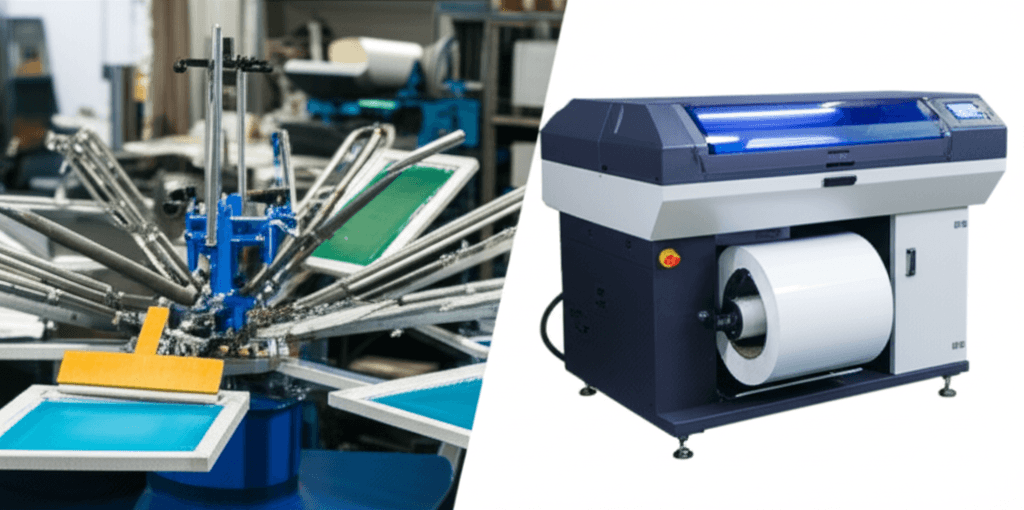
Screen printing on polyester absolutely works when the shop treats it as its own job type: low-bleed polyester inks, a gray blocker base under light colors on the riskiest garment colors, and lower cure temperatures on the conveyor dryer. We go deep on that process in how to screen print on polyester without bleeding. For a simple logo in one to four colors on 36 or more pieces per design, screen printing is usually the best value per shirt.
Embroidery
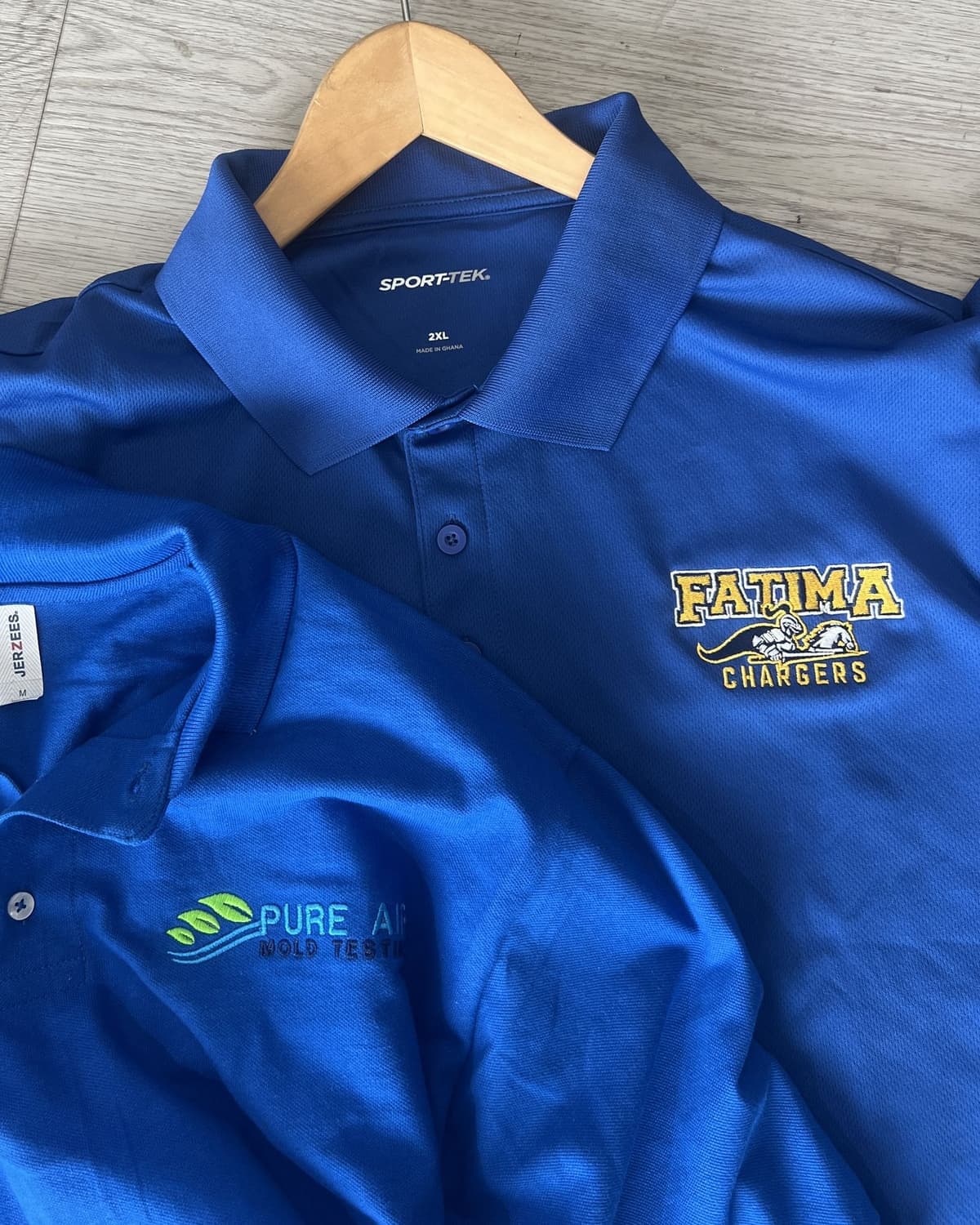
Thread does not care about dye migration, and it does not crack. Embroidery is the go-to for performance polos, quarter-zips and jackets, especially for corporate teams and coaches. Lightweight performance knits need the right backing and a design digitized for the fabric so the stitches do not pucker. New logos carry a one-time digitizing fee; reorders reuse the file.
Heat transfer vinyl
HTV is cut from sheets of vinyl and pressed on. It is the cleanest way to add individual player names and numbers on top of a screen printed or DTF team design, and stretch vinyls exist for performance fabric.
Why not DTG?
DTG jets water-based ink that bonds with cotton fibers. On polyester the ink has nothing to grab, so prints come out dull and wash poorly. If your heart is set on DTG, switch to a cotton or high-cotton blank. Our DTG vs DTF comparison explains the split in more detail.
Can you do all-over prints on polyester?
This is the question we hear most, so here is the straight answer. A true seam-to-seam, edge-to-edge print, where the pattern wraps under the arms and around the side seams, is made by printing the fabric before the garment is sewn. That is a cut-and-sew product, and it is not something we make.
What we can do on a finished polyester garment covers most of what people actually want:
- Oversize front and back prints. Our M&R Oversize automatic press handles large-format screen prints, and DTF transfers can cover a full front or full back.
- Multiple locations. Front, back, both sleeves, a nape print and a hip hit add up to a garment that reads as fully designed.
- Sleeve and side placements. The swing-away press lets us hit sleeves and odd spots cleanly.
- Mixed methods. A screen printed body graphic, DTF accents and HTV names on one jersey is a normal job for us.
If a design truly needs color from seam to seam, tell us early and we will say honestly whether a placed-print version will get you there.
How do you pick the right method for your order?
Work through it in this order:
- How many pieces per design? Under 12 on polyester, talk to us; DTF starts at 12, HTV at 6. At 36 or more per design, screen printing comes into play. The volume tier counts the total pieces on the order, so several designs together still earn the larger-run rate.
- How many colors? One to four flat colors favors screen printing at volume. Full color, gradients or photos favors DTF.
- What color is the garment? Bright red, royal and kelly green polyester are the most prone to dye migration. DTF is the safest call on those unless the run is big enough to justify a screen printed test.
- How stretchy is it? Spandex blends and compression wear need flexible prints: DTF, stretch HTV, or screen print ink with a stretch additive.
- Is it a polo, jacket or hat? Embroidery is often the better look, and hats follow a 24 piece minimum whatever the decoration.
Still unsure? Our guide on how to choose a print method walks through all five options, and the quote builder will price your exact garment and quantity.
What garments work best?
For printing, look for performance tees and jerseys that are 100% polyester or a poly-spandex blend from the major blank brands, in a color you have tested or are willing to test. Lighter garment colors are the easiest. Moisture-wicking finishes are fine for DTF and embroidery; for screen printing on treated fabrics we run a test first.
If you are building team uniforms, our team jersey ordering guide covers sizing, rosters and names and numbers, and DTF vs screen printing for polyester jerseys puts the two main print methods side by side.
How does an order work at French Press Custom?
- Send your artwork, garment, quantities by size and print locations through the quote builder or our contact page.
- We confirm the method that fits your fabric and design and send an estimate. Metallic inks and other specialty finishes are available at an extra charge quoted on the estimate.
- A 50% deposit starts the job, and you approve a digital proof before anything prints.
- We print, cure and inspect. Standard turnaround is about 2-3 weeks after the artwork is approved and the deposit is paid, and it moves with the production schedule, so tell us your event date up front.
- Pick up at the shop Monday through Friday, 8am to 4pm, or we ship UPS or FedEx to a street address (no PO boxes). The balance is due before pickup or shipping.
Your artwork stays on file, so a reorder of the same design is quick to quote.
Frequently asked questions
Can you make seam-to-seam all-over printed garments?
No. We do not offer sublimation or cut-and-sew all-over garments. For polyester and performance wear we use DTF transfers, low-bleed screen printing, embroidery and heat transfer vinyl, which cover placed prints of almost any size on finished garments.
What is the best way to print a full-color design on a polyester shirt?
DTF is usually the best choice. The transfer carries its own white layer, so colors stay bright on any garment color, it handles gradients and photos, and it flexes with performance fabric. DTF starts at 12 pieces.
Can you screen print on moisture-wicking shirts?
Yes. We use low-bleed polyester inks, lower cure temperatures and, on risky colors, a gray blocker base. Some moisture-wicking finishes resist ink, so on an unfamiliar garment we run a test print before the full order.
Can DTG print on polyester?
Not well. DTG ink is made to bond with cotton fibers, so on polyester it looks dull and fades quickly in the wash. Use DTF on polyester, or switch to a cotton blank if you want DTG.
Will the print crack on stretchy compression or spandex garments?
Not if the method fits the fabric. DTF transfers and stretch vinyl flex with the knit, and screen printing ink can be mixed with a stretch additive. Thick, stiff ink deposits are what crack, which is why we set up stretch garments differently.
What is the minimum order for printing on polyester?
It depends on the method: DTF starts at 12 pieces, screen printing at 36 pieces per design, embroidery and hats at 24, and heat transfer vinyl at 6. See custom shirt minimums by print method for the full breakdown.