For polyester jerseys, DTF transfers win on small runs, full-color art and dark or bright jerseys, while low-bleed screen printing wins on simple one to four color logos once you reach 36 or more jerseys per design. Names and numbers usually go on with heat transfer vinyl or DTF either way. Most team orders end up using two methods on the same jersey, and that is fine.
Below is the side-by-side we walk coaches, league directors and team moms through at our Santa Fe Springs shop, with the tradeoffs that actually matter on slick performance fabric: dye migration, stretch, quantity and color count.
What is the difference between DTF and screen printing?
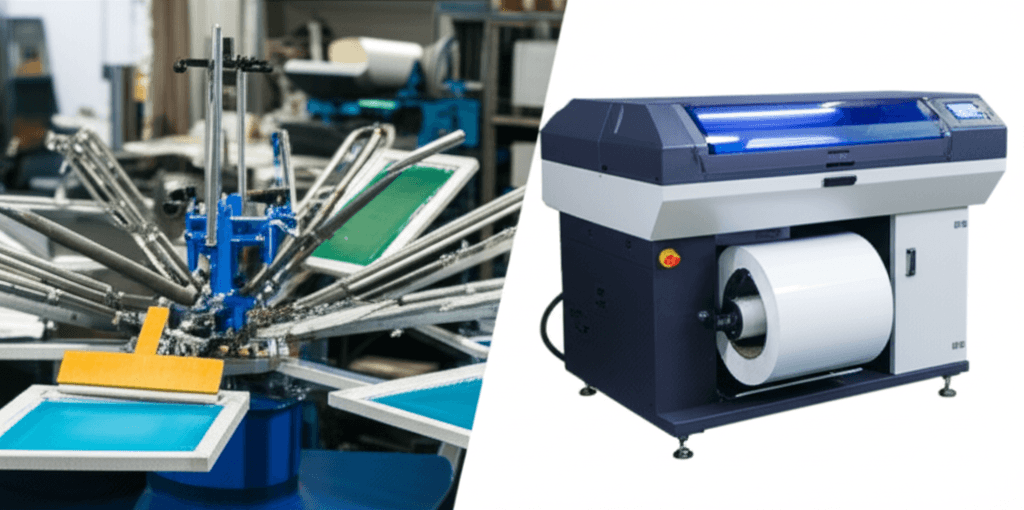
Screen printing pushes ink through a mesh stencil, one screen per color, directly onto the jersey. Ink is then cured on a conveyor dryer. On polyester we switch to low-bleed polyester inks and lower cure temperatures to keep the jersey dye from bleeding into the print. Because every color needs its own screen and press setup, screen printing gets cheaper per piece as quantity climbs, and the setup is built into that per-piece price rather than billed as its own line.
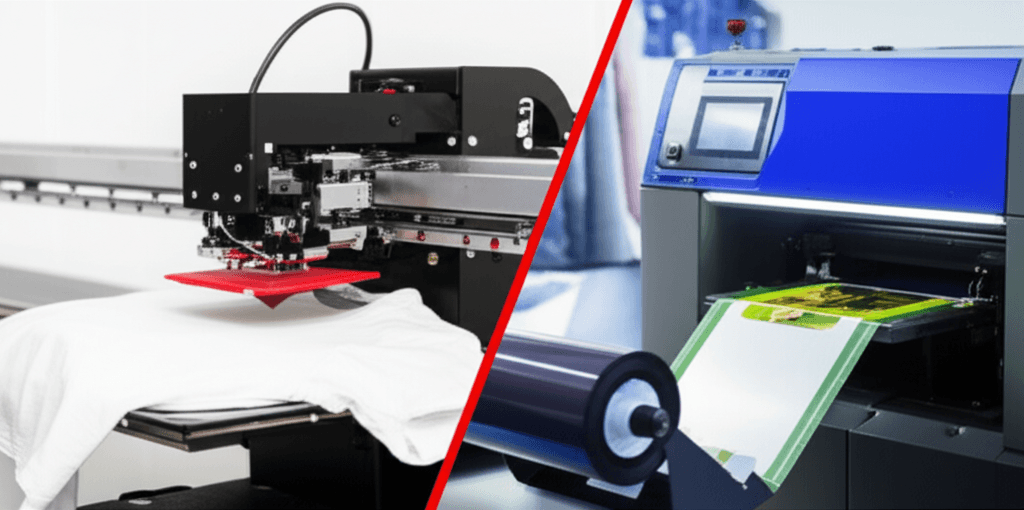
DTF (direct-to-film) prints the full design, colors plus a white layer behind them, onto a sheet of film. Adhesive powder is applied, the film is cured, and the transfer is heat pressed onto the jersey. There are no screens, so a 12 color design costs the same to produce as a one color design, and every jersey can be different.
DTF vs screen printing at a glance
| Factor | DTF transfers | Screen printing (low-bleed) |
|---|---|---|
| Minimum | DTF from 12 pieces | 36 pieces per design |
| Color count | Unlimited, no change in cost | Each color adds to the price |
| Gradients and photos | Excellent | Possible with simulated process, best at volume |
| Dark and bright jerseys | Bright on any color, white layer built in | Works with a blocker or underbase on risky colors |
| Dye migration risk | Low, pressed at lower heat with a short dwell | Managed with low-bleed ink, lower cure, testing |
| Stretch | Thin, flexible film moves with the knit | Needs a stretch additive on spandex blends |
| Feel | Thin smooth film | Soft ink layer, depends on deposit |
| Cost at volume | Flat per transfer, steps down with quantity | Lowest per piece on big runs of simple art |
| Names and numbers | Each one is just another print on the film | Usually paired with HTV or DTF |
When does DTF win?
- Smaller rosters. A 15 player team sits comfortably above the DTF minimum of 12 pieces. That same roster falls under the screen print minimum of 36 per design.
- Full-color logos. Crests with gradients, photo elements or more than four colors cost the same in DTF as a single color.
- Bright red, royal and kelly green jerseys. These are the colors most prone to dye migration. DTF goes on at lower heat for a short press time, which makes it the safer call when the garment is a known bleeder.
- Personalized jerseys. Name, number and team logo can all print on the same film run, one set per player.
- Matching reorders. Your artwork stays on file, so when the program grows, new jerseys can match the originals on the next order (DTF still starts at 12 pieces per order).
Read more on our DTF transfer service page, and check current pricing in the DTF cost guide.
When does screen printing win?
- Volume. Once you are at 36 or more jerseys per design, and especially at 100 or more, a one to three color screen print usually beats DTF on price per piece. The volume tier counts total pieces on the order, so a league ordering several team designs together earns the bigger-run rate even though each design still needs its own 36.
- Simple, bold art. Block lettering, a one color mascot and a sponsor line are exactly what screen printing does best.
- Feel and finish. A well-deposited polyester ink feels like part of the jersey, and specialty options from our specialty inks lineup open up looks DTF cannot match. Metallic inks are available at an extra charge quoted on the estimate.
- Big front and back prints. Our M&R Oversize automatic press handles large-format placements efficiently on a long run.
The tradeoff is process discipline. Polyester screen printing takes low-bleed ink, a gray blocker base on the riskiest colors, lower cure temperatures and a test print. We cover the full method in how to screen print on polyester without bleeding. Pricing by quantity is in the screen printing cost guide.
What about dye migration?
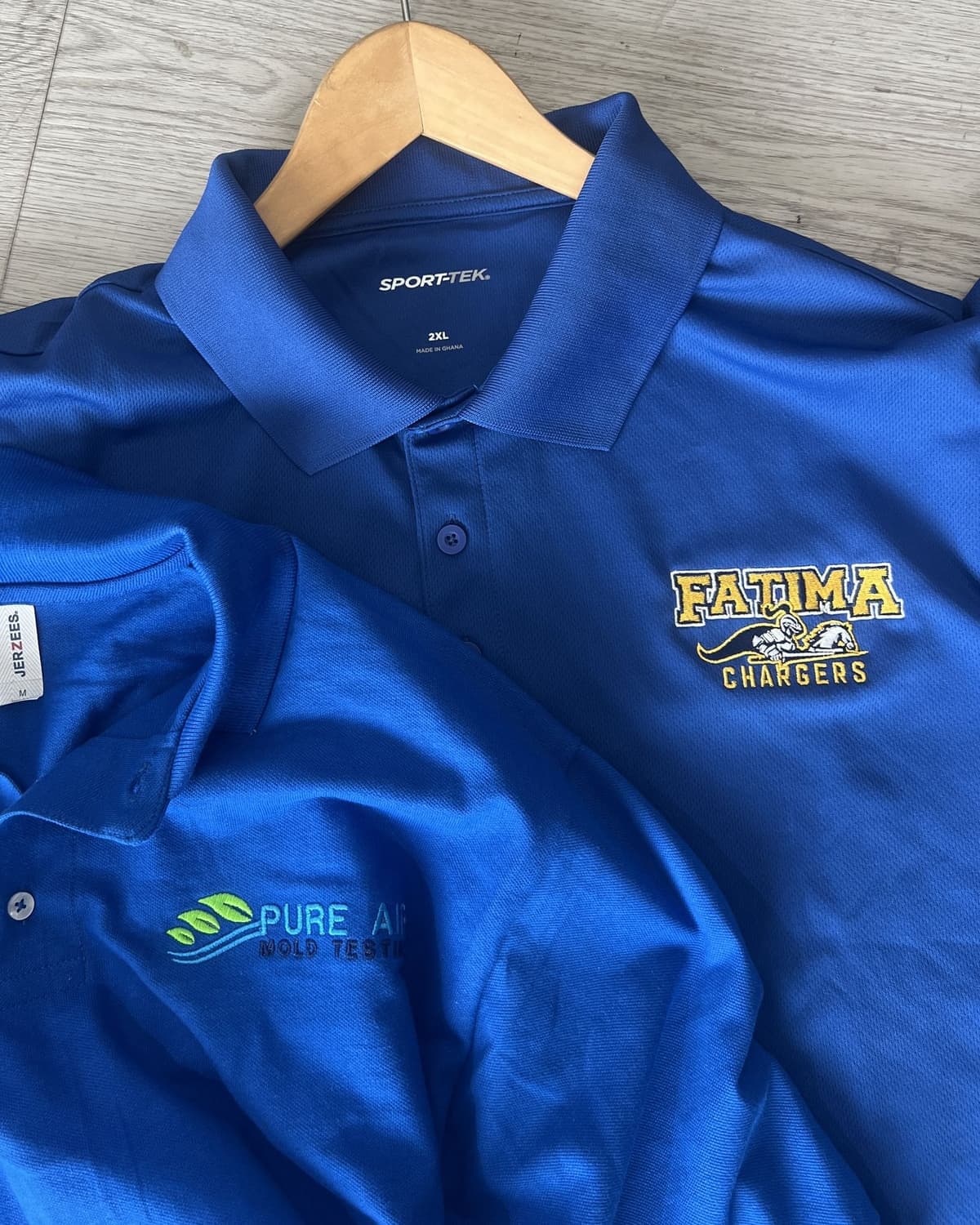
Dye migration happens when the disperse dye in a polyester jersey reactivates under heat and moves into the print. A white number on a red jersey turns pink, sometimes hours after printing. Both methods can beat it:
- DTF applies at a lower temperature with a short press time, and the transfer's white layer acts as a barrier.
- Screen printing uses low-bleed polyester inks designed to block dye, a gray base where needed, the lowest effective cure temperature, and fast cooling so warm jerseys are not stacked.
Either way, ask your printer how they handle migration before you hand over a box of red jerseys. We test print risky garment colors before running the full order.
Which is better for names and numbers?
For individual player names and numbers there are two good options:
- Heat transfer vinyl. Cut from sheet vinyl, weeded and pressed. Crisp edges, durable, and stretch vinyls exist for performance fabric. HTV starts at 6 pieces, and our HTV guide explains when it is the right call.
- DTF. Better when numbers carry multiple colors, outlines or a gradient, because the whole number prints in one transfer.
Screen printing individual numbers is possible with number screen sets, but for a typical team roster vinyl or DTF is faster and cleaner. A very common combination: screen printed or DTF team logo on the front, vinyl names and numbers on the back.
How do you decide for your team?
| Your situation | Our usual recommendation |
|---|---|
| 12 to 35 jerseys, any art | DTF logo, HTV or DTF names and numbers |
| 36+ jerseys, 1 to 3 color logo, light jersey | Screen print logo, HTV names and numbers |
| 36+ jerseys, full-color crest | DTF, or screen print with simulated process at high volume |
| Red, royal or kelly green polyester | DTF, or screen print after a passing test print |
| Compression or high-spandex fabric | DTF or stretch HTV |
| Multi-team league order | Screen print where each design reaches 36, DTF for the rest |
For a full walk-through of jersey sizing, rosters and deadlines, see our team jersey ordering guide. If you are printing on other performance garments too, how to print on polyester and performance wear covers every method that works on synthetics.
French Press Custom does not offer sublimation or cut-and-sew jerseys; we decorate finished jerseys you choose from the major blank brands, or that you supply.
How does ordering work?
Send the jersey style, roster with sizes, names and numbers, and your artwork through the quote builder or our contact page. We confirm the method, send an estimate, and a 50% deposit starts the job. You approve a digital proof before anything prints. Standard turnaround is about 2-3 weeks after the artwork is approved and the deposit is paid, and it moves with the production schedule, so give us your first game date early. Pick up at 14130 Rosecrans Ave in Santa Fe Springs, Monday through Friday 8am to 4pm, or we ship UPS or FedEx to a street address. The balance is due before pickup or shipping.
Frequently asked questions
Is DTF or screen printing more durable on polyester jerseys?
Both last for seasons when done correctly. Screen printing with a full cure is extremely durable, and a properly pressed DTF transfer flexes with the fabric and holds up to regular washing. Most failures come from bad application, such as the wrong temperature, pressure or press time, not from the method itself.
What is the minimum for printed team jerseys?
DTF starts at 12 pieces, screen printing at 36 pieces per design, and heat transfer vinyl names and numbers at 6. If your roster is under 36, DTF is usually the right fit for the team logo.
Will a white print turn pink on a red jersey?
It can, through dye migration, if the shop uses standard ink and full cotton cure temperatures. We prevent it with low-bleed inks, a blocker base, lower cure temperatures or DTF, and we test print the risky colors before running the order.
Can I mix DTF and screen printing on the same jersey?
Yes, and it is common. A screen printed front logo on a big order with DTF or vinyl names and numbers on the back gets you the best price on the shared design and full personalization per player.
How should players wash printed polyester jerseys?
Wash inside out in cold water, skip bleach and fabric softener, and hang dry or tumble on low. High dryer heat is the enemy of every print method on polyester.