On a Stanley/Stella Creator 2.0, DTG is the only one of the four methods with no minimum and gives the softest print on light shirts. DTF handles full color on any shirt color from 12 pieces. Screen printing suits bright, solid spot colors from 36 pieces, and embroidery suits a small logo from 24 pieces.
We are an official Stanley/Stella dealer in Santa Fe Springs, and we run all four methods. The full lineup is on our Stanley/Stella hub.
What are the minimums for each method?
| Method | Minimum per design | Shirt color | Best for |
|---|---|---|---|
| DTG | None, 1 piece | Dark shirts are pretreated and get a white underbase | Samples, one-offs, photos and gradients |
| DTF | 12 pieces | Same result on any color | Full color on dark shirts and blends |
| Embroidery | 24 pieces | Thread, so shirt color does not change the method | A small logo on uniforms and company gear |
| Screen printing | 36 pieces | A dark shirt needs a white underbase under the ink | Runs of 36 and up with 1 to 4 spot colors |
Under 36 shirts our calculator will not quote a screen print. It points you to DTG instead, with the message that screen printing starts at 36 pieces per design.
How does each method look and feel?
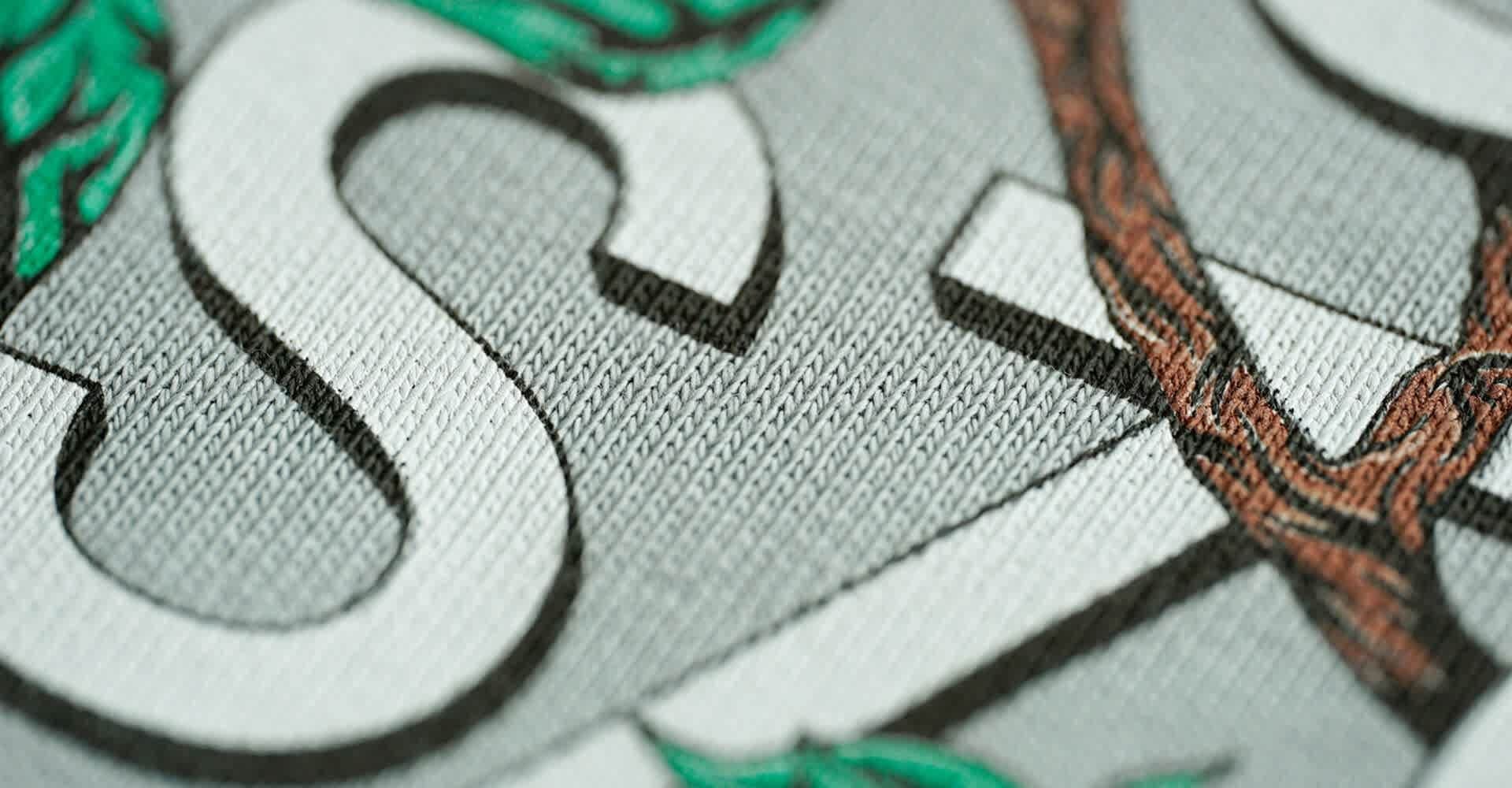
Screen printing pushes ink into the fabric through a screen, one screen per color. It is our pick for runs of 36 and up with 1 to 4 spot colors, and for bright, solid colors. Water-based and discharge inks become part of the fabric instead of sitting on top. The Creator 2.0 is 100% organic ring spun combed cotton per Stanley/Stella's product data, a smooth surface for ink, as we explain in why Stanley/Stella blanks are great for screen printing.
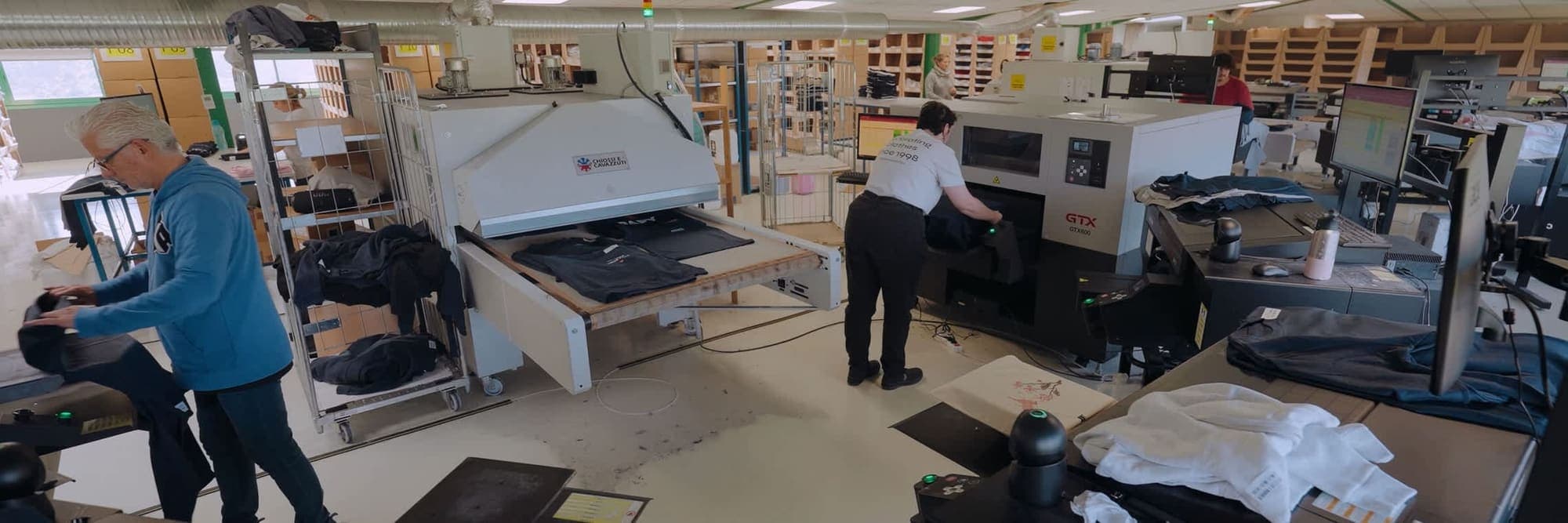
DTG (direct to garment) is an inkjet print straight onto the cotton. No screens, so photos and gradients print as easily as a one-color logo. On white and light shirts the ink soaks into the cotton with almost no layer on top. On dark shirts it still looks good, with more contrast. See DTG printing on Stanley/Stella shirts.
DTF (direct to film) prints the design onto a film that is heat pressed onto the shirt. The transfer carries its own white layer, so it handles full color on any shirt color. The print sits on top of the fabric as a thin, flexible film, so it feels different from a screen print or DTG, more so on large prints. See DTF printing on Stanley/Stella shirts.
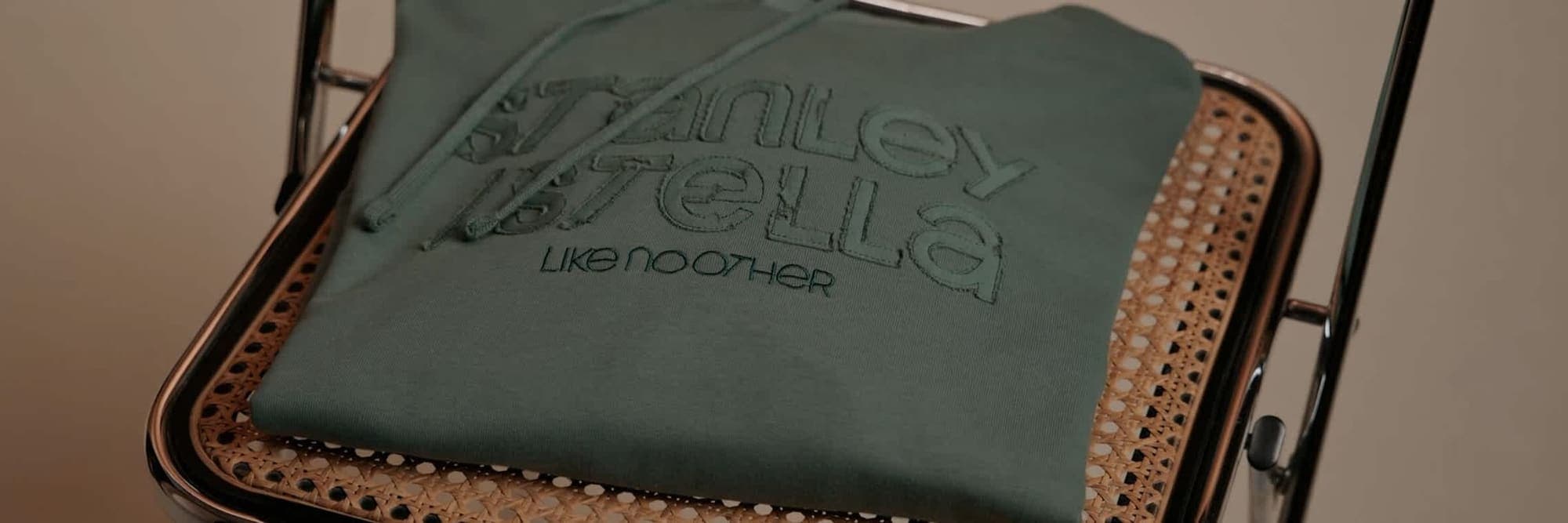
Embroidery stitches the logo in thread. It is the premium choice for uniforms and company gear, best for a small left chest logo rather than a big design.
How much detail and how many colors can each method handle?
- Screen printing: one screen per ink color, so it is at its best with 1 to 4 spot colors and bold, solid shapes.
- DTG: full color, photos and gradients, with no screens to separate.
- DTF: full color, photos and gradients on any shirt color, including black and blends.
- Embroidery: a logo in thread, sized by stitch count. A small left chest logo of up to 5,000 stitches is the classic placement.
Which method suits which Stanley/Stella garment?
Tees like the Creator 2.0. The Creator 2.0 is 100% organic ring spun combed cotton, which suits all four methods. DTG prints best on 100% cotton, so it is at its best here, especially in White or Natural Raw. On Black or French Navy, DTG needs pretreat and a white underbase, while DTF does not.
Hoodies like the Cruiser 2.0. The Cruiser 2.0 is 80% organic ring spun combed cotton and 20% recycled polyester, a 3-end brushed fleece with a 100% organic cotton face, at 10.3 oz per square yard. DTF does not depend on the fiber mix, so it handles full color on the blend. A heavier fleece holds a dense logo without puckering as much as a thin knit, which makes the Cruiser 2.0 a good base for embroidery. Plan any full front design to sit above the kangaroo pocket. Embroidery on hoodies has its own guide: embroidery on Stanley/Stella hoodies and sweatshirts.
A quick way to decide
| Your order | Usually the best fit |
|---|---|
| 1 to 11 shirts, any art | DTG |
| 12 to 35 shirts, full color or dark shirts | DTF |
| 12 to 35 light shirts, soft feel matters | DTG |
| 36+ shirts, 1 to 4 spot colors | Screen printing, with DTF as the full color alternative |
| 24+ polos, hoodies or staff shirts with a logo | Embroidery |
Once you have a method in mind, get an exact price for your quantity and print in our instant quote calculator.
Our take
As the Stanley/Stella dealer in Santa Fe Springs, we suggest comparing at least two methods for any order, because the look and feel of the print matter as much as the quantity. For a brand launch on the Creator 2.0, a sensible path is DTG for samples, then screen printing once the run reaches 36 or more and the design fits a few spot colors. For staff hoodies, a left chest logo on the Cruiser 2.0 lasts and looks the part. Stanley/Stella's own Creator 2.0 page shows all of its colors.
Ordering from Los Angeles or Orange County
- Where we are. 14130 Rosecrans Ave, Santa Fe Springs, CA 90670, serving Los Angeles and Orange County. Pickup is free, or we ship by UPS or FedEx anywhere in the US.
- Minimums. DTG none, DTF 12, embroidery 24, screen printing 36 pieces per design.
- Timing. About 2-3 weeks after art approval. Rush available depending on the schedule. Tell us your date.
- Contact. Mon-Fri 8am-4pm PT, (562) 407-3800, sales@frenchpresscustom.com.
Quote your own mix: screen printing, DTG, DTF or embroidery.
Frequently asked questions
Which method is best for a small run on Stanley/Stella?
For 1 to 11 shirts, DTG, because it has no minimum. From 12 pieces DTF opens up, which suits full color art and dark shirts. Embroidery starts at 24 pieces and screen printing at 36 pieces per design.
When should you choose screen printing over DTG?
When the run is 36 shirts or more and the design uses 1 to 4 spot colors. Screen printing gives bright, solid color, while DTG is the better fit for photos, gradients, samples and small runs.
What is the minimum order for each method?
DTG has no minimum, DTF starts at 12 pieces, embroidery at 24 pieces and screen printing at 36 pieces per design.
Does shirt color change the result?
For DTG and screen printing, yes. A dark shirt needs a white ink underbase under the color, and for DTG it is pretreated first. A DTF transfer carries its own white layer and embroidery is thread, so neither depends on shirt color.
Does embroidery need digitizing?
Yes. Each logo placement is digitized into a stitch file before it is sewn. We keep the stitch file, so a reorder of the same logo is stitched from the file we already have.
Which method lasts longest on Stanley/Stella?
Embroidery and screen printing are the usual picks for gear that gets washed a lot. Stanley/Stella's care data is: machine wash cold at 86°F, do not bleach, tumble dry low, iron low heat. We also suggest turning the shirt inside out and keeping the iron off the print.