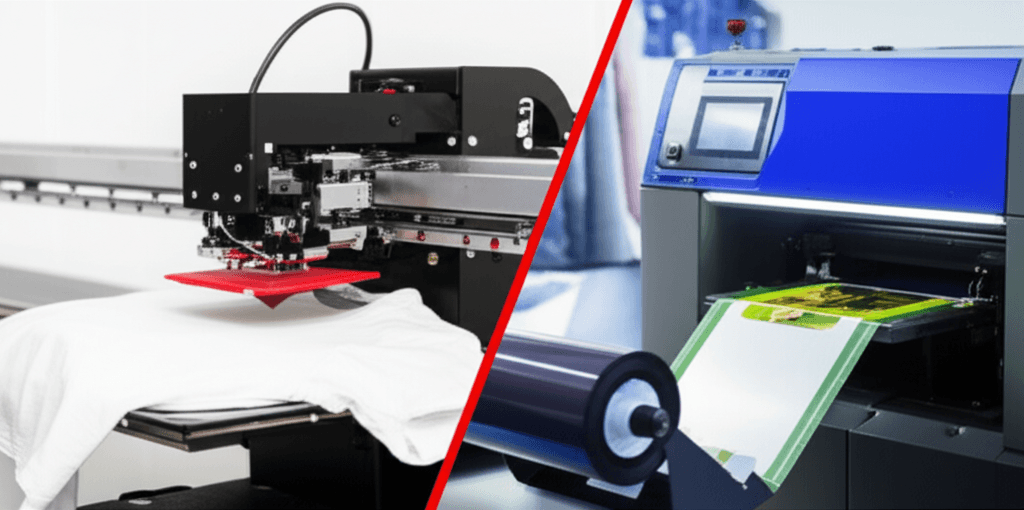
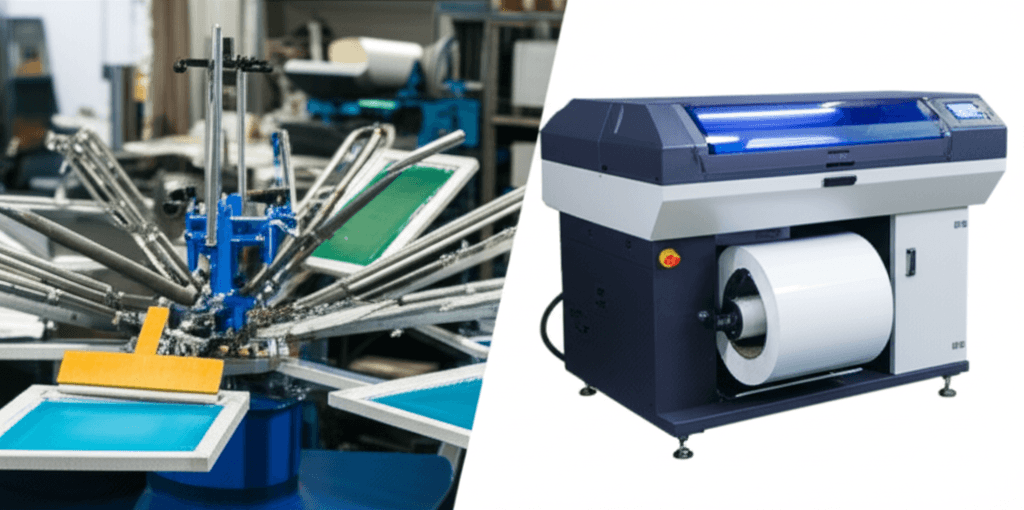
Sublimation dyes the polyester fiber itself, which makes it the best choice for all-over designs on white or light-colored 100% polyester. DTF (direct-to-film) applies a thin flexible transfer that works on any fabric color and any blend, which makes it the practical choice for dark jerseys, cotton blends, and name-and-number personalization.
Both methods are built for exactly the garments screen printing struggles with, slick polyester jerseys and performance wear, but they get there in completely different ways, and picking the wrong one costs you either color or coverage. Here is how to choose.
What is the difference between sublimation and DTF?
Sublimation ink turns into a gas under heat and bonds inside polyester fibers. The image becomes part of the fabric: zero added weight, zero feel, and nothing sitting on the surface. The catch is chemistry, since the dye only bonds with polyester and is translucent, so it needs a white or light base to show true color.
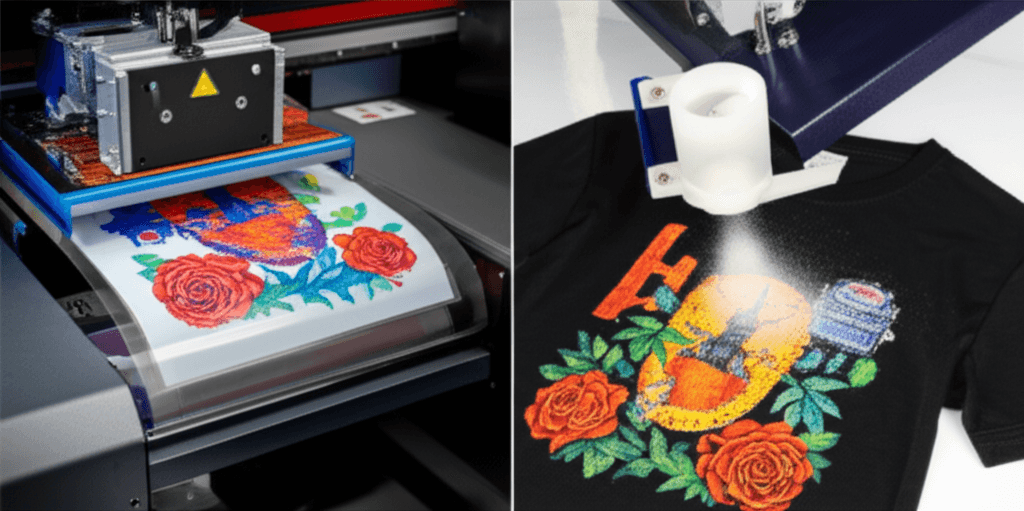
DTF prints your design onto a film, backs it with adhesive powder, and heat presses it onto the garment. The transfer includes its own white ink layer, so it prints bright on any color, and the finished print is a thin, stretchy film that moves with the knit. Our DTF transfer service runs designs this way daily on everything from cotton tees to poly performance gear.
| Factor | Sublimation | DTF |
|---|---|---|
| Fabric | 100% polyester (or very high poly) | Any fabric or blend |
| Garment color | White or light only | Any color, including black |
| Feel | None, dye is in the fiber | Thin flexible layer |
| Durability | Life of the garment, cannot crack | Excellent when pressed correctly |
| Coverage | All-over, edge to edge | Placed designs up to large format |
| Names and numbers | Best in cut-and-sew workflows | Fast and economical per player |
Can you sublimate on dark or black jerseys?
No, and this is the deciding factor for most teams. Sublimation dyes are translucent, and there is no white sublimation ink, so on a black or navy jersey the design simply disappears into the fabric. The only way to get a sublimated dark jersey is full cut-and-sew, where the fabric is printed before the garment is assembled. If your jerseys are already dark, DTF is the answer: its white underbase makes colors pop on black polyester just as they would on white.
Which lasts longer on performance wear?
Sublimation wins on pure longevity, because there is nothing to peel: the dye is inside the fiber, so it cannot crack, lift, or flake, and it lasts the life of the garment. That said, a properly pressed DTF transfer is genuinely durable, stretching with the knit and surviving season after season of washing. Most DTF failures trace back to bad application, wrong temperature, wrong pressure, or wrong dwell time, which is a shop-quality issue rather than a method flaw. Wash cold and skip the dryer heat and both methods will outlast the season.
Does DTF work on 100% polyester and blends?
Yes, and that flexibility is DTF's whole pitch. The same transfer process handles cotton, polyester, tri-blends, and nylon, in any garment color. Polyester does bring one trap: dye migration, where the garment dye wicks into the print under heat, most famously turning white prints pink on red poly. An experienced shop controls this with low-temperature application and blocker layers, so ask how your printer handles migration before running a batch of red or maroon jerseys.
Which is better for team jerseys with names and numbers?
For stock jerseys that need a team logo plus individual names and numbers, DTF is usually the winner. Every player's personalization is just another print on the film, no screens, no vinyl weeding, and one-offs for a mid-season pickup are easy. Reorders are painless too: when two new players join in week four, their jerseys print and press without touching the rest of the roster. DTF at French Press Custom starts at a 12-piece minimum and typically turns around in 5-7 business days, with rush service in 2-3, which matters when the season opener is on the calendar.
Sublimation is the choice when the design is the jersey: full custom cut-and-sew uniforms with edge-to-edge patterns, gradients, and colors that cannot fade. If that is your project, start with our sublimation guide.
What does each method cost?
Pricing depends on quantity, print size, and the garment itself, so the honest answer is a quote. Current DTF per-transfer pricing by quantity is in our DTF cost guide, and the quote builder prices your exact jersey job, garments included, in about a minute. Send us the roster and the artwork and we will tell you straight which method your project actually needs.